
Bikepacking Colorado on the Great Divide: Marshall Pass and the Kokopelli Trail
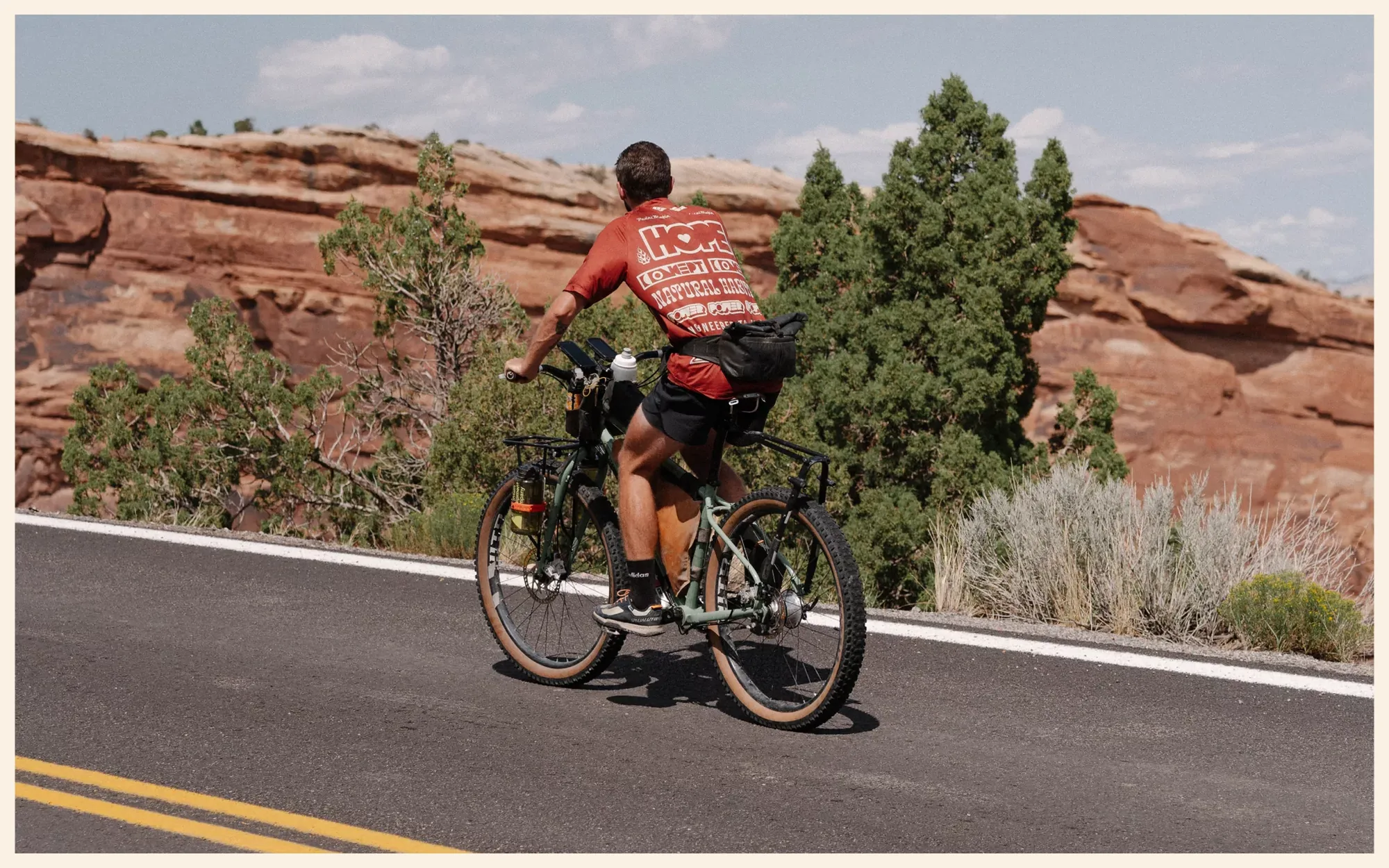
Colorado was the state I was banking everything on… and the one that nearly finished me off! In August 2024, Marie-Liesse and I entered Colorado on the Great Divide Mountain Bike Route (GDMBR), the long gravel route linking Canada to Mexico. In nineteen days, we rode through Steamboat Springs, Frisco, Breckenridge, Boreas Pass and Marshall Pass, before hitchhiking to Grand Junction and tackling the Kokopelli Trail: 643 km and 8,542 m of climbing by bike, a bacterium in my gut and a thunderstorm almost every afternoon.
In the podcast, Marie-Liesse and I told Jean-Mi everything as it happened. Here, I go back over the moments that stuck with us the most, and give you what you need to know to ride in Colorado: the route, the stages, the passes, the storms, where to sleep, and why the Colorado Trail is not for a 50-kg bike.
In short
- When: August 9 to 27, 2024, in the height of summer, the two of us, right after our last day in Wyoming.
- The route: the Great Divide from the Wyoming border to Sargents, via Brush Mountain Lodge, Steamboat Springs, Frisco, Breckenridge, Boreas Pass, Salida and Marshall Pass; then Gunnison, Montrose and Delta by hitchhiking, Grand Junction, Colorado National Monument and the first day of the Kokopelli Trail.
- The ride: 643 km and 8,542 m of climbing over 13 rides (52 hours in the saddle), town rides included, plus two stretches by car: a canoe truck to Frisco, and hitchhiking from Sargents to Grand Junction.
- The people: Buddy and his fishing flies, Jennifer the waitress, Randy the bull breeder, Greg the giant of Grand Junction… and a farmer who handed me an orange from his tractor.
- Sleeping: campgrounds, a legendary Great Divide lodge, Warmshowers hosts, motels, at a rancher’s… and in a post office.
- The challenge: my stomach. A bacterium picked up from Great Basin water doubled me over for almost two weeks. And the storms, almost every afternoon.


Our bike route through Colorado
- River Bend Campground → Brush Mountain Lodge: 23 km and 467 m of climbing, a short day to a legendary Great Divide lodge. The day before, we rode 117 km from Rawlins to this campground on the border (a stage counted in Wyoming).
- Brush Mountain Lodge → Steamboat Springs: 85 km and 1,151 m, including about forty kilometers of climbing, with a storm on our heels. The next day, rest at Jody’s, our Warmshowers host (3 km town ride).
- Steamboat Springs → Lynx Pass: 62 km and 1,030 m, sick as a dog. The worst day of my life on a bike.
- Lynx Pass → Radium: 37 km and 513 m to the Colorado River, then a canoe truck to Frisco. A few rest days in a hotel in Frisco.
- Frisco → Copper Mountain → Frisco: 43 km and 581 m, including 2 km on the Colorado Trail… in 2 hours. We turned back.
- Frisco → Breckenridge → Boreas Pass → Como: 50 km and 854 m, hail on the descent, and a night in the post office.
- Como → Salida: 127 km and 1,092 m, between trucks and storms. A night in a motel, hot tub included.
- Salida → Marshall Pass → Sargents: 67 km and 1,151 m, including 30 km of climbing up to 3,305 m. The end of the Great Divide for us.
- Hitchhiking: from Sargents to Gunnison with Jennifer, from Gunnison to Montrose with Randy, then from Montrose to Delta, where Greg picks us up for Grand Junction. A few days of rest (and hospital) in Grand Junction, with two short town rides and a first attempt at Colorado National Monument, cut short by a flat.
- Grand Junction → Colorado National Monument → Kokopelli Trail: 60 km and 694 m, the first day of the Kokopelli and a night under the stars.
| Day | Stage | Km | D+ | Time |
|---|---|---|---|---|
| 1 | River Bend Campground → Brush Mountain Lodge | 23 km | 467 m | 2h16 |
| 2 | Brush Mountain Lodge → Steamboat Springs | 85 km | 1,151 m | 6h36 |
| – | Town ride in Steamboat Springs | 3 km | 42 m | 0h15 |
| 3 | Steamboat Springs → Lynx Pass | 62 km | 1,030 m | 5h38 |
| 4 | Lynx Pass → Radium (then by car to Frisco) | 37 km | 513 m | 2h59 |
| 5 | Frisco → Colorado Trail → Frisco | 43 km | 581 m | 4h32 |
| 6 | Frisco → Breckenridge → Boreas Pass → Como | 50 km | 854 m | 3h47 |
| 7 | Como → Salida | 127 km | 1,092 m | 8h27 |
| 8 | Salida → Marshall Pass → Sargents | 67 km | 1,151 m | 5h41 |
| – | Town rides in Grand Junction | 59 km | 463 m | 3h52 |
| – | Colorado National Monument, 1st attempt (flat tire) | 27 km | 504 m | 1h48 |
| 9 | Grand Junction → Colorado National Monument → Kokopelli Trail (day 1) | 60 km | 694 m | 5h45 |
| Total, from the Wyoming border to the Kokopelli Trail | 643 km | 8,542 m | 51h40 |
Times are moving times, breaks not included. Car rides aren’t counted.
All our tracks are on our Route & Stats page, “Banff > Sargents” and “Kokopelli Trail” sections, and the details of each day are on my Strava.


Colorado on the Great Divide
In Colorado, the Great Divide Mountain Bike Route comes in through the forests on the Wyoming border, goes through Steamboat Springs, drops down to the Colorado River at Radium, then crosses the ski towns of Frisco and Breckenridge. It then climbs two big passes built on old 19th-century railroad grades: Boreas Pass, between Breckenridge and Como, and Marshall Pass, at 3,305 m, on the Continental Divide. Built in 1881, the Marshall Pass railroad was the first to cross the Continental Divide in Colorado (Wikipedia). After Sargents, the route continues south toward New Mexico. We left it there to head for Utah via Grand Junction and the Kokopelli Trail.
In between, there was the Colorado Trail. This trail of about 780 km (485 miles) links Denver to Durango through the Rockies. By bike, you have to detour around six wilderness areas closed to bikes: the version published on bikepacking.com is 867 km (539 miles) (bikepacking.com). A dream for me. A nightmare for our bikes, as you’re about to see.
What we lived through in Colorado
Darts in Rawlins
In Wyoming, we had just crossed the Great Basin, our first desert, with a whole gang of friends. In Rawlins, everyone goes their own way again. We need refinement, fine dining: off to Burger King. Then we look for a hotel with a pool, because after three days at more than 50 °C, that’s all we dream of. A word of caution, though: in America, the pool advertised on booking sites is often empty, or closed “just for today”.
We roll up to the front desk with our bikes covered in desert dust. The receptionist asks where we’re coming from and what we’re doing. We tell her. Verdict: 25 dollars a night, thanks to a cyclist discount, and the pool works. We take two nights!
In the evening, we meet up with Nunzio and Annie, two friends from the Great Basin, for a movie. The sign on the door says “open”. Inside, the popcorn machine is empty. Some kids passing by explain: the owners have gone away for the weekend, so the cinema is closed. Simple! That’s small-town America too. We fall back on the local pub and play darts all evening. The next day, the gang goes to a rodeo. We pass: we already saw one in Helena, and the tickets are expensive.
The fox and the border
Crazy Guy on a Bike, the site where cyclists write up their trips, had warned us: 70 km of dirt, gravel and sand await after Rawlins. We plan on five or six hours. Surprise: the road is brand new, smooth as a billiard table. Machines are still painting the white and yellow lines! The tires roll on their own, and we finish the 70 km in two and a half hours. As for scenery, not much to report: arid, flat plains in straight lines.
Then we join the track, and everything changes. Fine gravel, a forest of white-trunked trees (aspens, which we took for birches at the time), and animals everywhere. In front of me, a fox trots along, skinny, exhausted. He starts chasing a rabbit. The rabbit darts right in front of my bike, and the fox stops dead, because of me. He looks at me, eyes lowered, tired. I feel like I’ve stolen his dinner right out of his mouth. I haven’t forgotten that look.
The day ends with a long descent at sunset, in soft light filtered by the clouds. Without saying a word, Marie-Liesse and I are overcome with emotion. We realize how lucky we are to be here. 117 km later, we reach the campground, by a small river that marks the border: we’re in the third state of our trip!
Dogs greet us, barking. Their owner comes to get them and invites us into his house to pay. The owners are two childhood friends who both lost their wives and now live together. Their house is a hunting museum: wolves, moose, bears, mountain lions, even stuffed fish. They’re proud of every trophy; each one has its story. It tugs at my heart a little. Being a sugar addict, I ask one of them if I can buy the Coke he’s drinking. He simply gives it to me.
At nightfall, Sarah and Sam, two friends from the Great Basin, show up in turn. They also felt that tug at the heart on the descent. A few hours apart, the same emotion.
Fargo at Brush Mountain Lodge
The next day, a short day to Brush Mountain Lodge, a Great Divide institution. In the middle of the mountains, nothing, then suddenly, a house. Cyclists plan their day around stopping there, a bit like the Llama Ranch in Montana. A lady with a slightly hippie style runs the place. You can rent a room or a house, but it’s expensive: we pitch the tent in the garden.
Sarah and Sam arrived a few hours before us. They have lunch and head off: they don’t ride at our pace, and I think they can’t wait to finish. Between 100 and 130 km a day, without pushing, with ultralight gear. In the Great Basin, one morning, we had left well before them, and they caught up with us as if it were nothing. Respect. We say goodbye with a little pang: it’s probably the last time we’ll see them.
In the evening, we cook our own dinner to save a few dollars, then settle into the lodge’s living room to watch Fargo, a crime series we’re binge-watching at the moment: murders, investigations, far-fetched stories, a bit gory at times. Big mistake. Afterwards, you have to go out in the dark and cross the garden to the tent. Let’s just say we don’t hang around.
In the night, the storm breaks. Rain, lightning, thunder all around. We think of Sarah and Sam, somewhere in the forest… and congratulate ourselves on staying.
A storm on our heels
The next day, a tougher day: 85 km and 1 151 m of climbing, with a climb of about forty kilometers. We often push the bikes. To keep going, Marie-Liesse listens to Les Baladeurs, an adventure podcast she loves. Today’s episode is about a hiker on the brink of dehydration, nearly dead after a series of disasters. The result: she doesn’t let go of her bottle for the whole climb. No way she’s ending up like him!
On the other side of the pass, the storm is waiting for us. Ahead, a gorgeous blue sky; behind, a deep black sky. As soon as we slow down, the first drops fall. On the ten or so kilometers of asphalt to Steamboat Springs, we ride flat out, the storm literally on our heels. Mission accomplished: we arrive almost dry at Jody’s, our Warmshowers host. We stay an extra day to sort our photos and videos. Jody shows us his photos of the Colorado Trail, the trail I’ve been dreaming of since the start of the trip. I can hardly wait.
The farmer’s orange
We leave Steamboat Springs, do our shopping, all is well. About fifteen kilometers later, after a small pass, I feel bad. Very bad. Stomach ache, nausea, hot, cold, headache: all the symptoms of the flu. I think back to the reservoir in the Great Basin, that water that smelled of cow dung, which we filtered and drank for lack of anything better. I spend an hour in a public toilet, door open, facing Stagecoach Reservoir. Marie-Liesse waits for me. I try to eat something at lunch: bad idea.
We set off again. The scenery is surely magnificent, but all I see is my handlebars and my feet. On the GPS, I’m riding at 5 km/h. An old man drives past on his tractor and looks at me: he’s understood. An hour and a half later, he comes back the other way, slows down… and hands me an orange.
When someone gives me food, it always moves me. It’s something they’re going without for me. This farmer had worked all day. That orange might have been his snack, his little end-of-day comfort. He gave it to me.
A bit further on, a man is spraying a kind of white paint on flowers, from a wand attached to his pickup. He works for the US Forest Service: these pretty flowers are invasive plants from China that smother everything around them. Marie-Liesse chats with him, his questions about our trip, our answers… Me, hanging back, nauseous, aching, the smell of weedkiller in my nose, I can only think one thing: “Are they ever going to stop talking?” You can’t brush off someone who’s interested in you. But that day, I would have liked to.
Then comes the moment I dread: the last pass, barely 3 or 4 km. I’m wrecked before the first steep bits. I climb at 2 km/h. You’d go faster on foot! It feels like I’ve been stabbed in the stomach, and I ache like after a car accident. Marie-Liesse stays in front and keeps the pace. Without her, I would have lain down at the side of the road and slept there until the next day.
At the Lynx Pass campground, I collapse on the picnic table. Marie-Liesse pitches the tent, cooks, takes care of everything. The campground is deserted, I’m finally going to sleep… until three or four young people arrive, pitch their tent and blast their music.


A canoe truck to Frisco
The next day, I’m no better. Yet we ride down to the Colorado River on a magnificent descent: the first truly beautiful landscape of Colorado. At the lunch break, it’s pouring, and I’m doubled over. We’ve stopped at Radium, a rafting base by the river, half campground, half boating center, with lots of big pickups coming through. Marie-Liesse has an idea: find a ride to Frisco, the nearest town. And a truck loaded with canoes drives past us…
It’s a nonprofit that takes people with disabilities, visible or invisible, canoeing and rafting. They have two seats left in the back, and a little room for our bikes on top of the canoes. Hoisting two 50-kg bikes up there, I’ll let you imagine the scene. But in an hour, we’re in Frisco, instead of five or six hours of climbing. And during the drive, our driver plays French music!
Frisco is a ski resort in winter, and a lake and fishing resort in summer. Everything there is outrageously expensive. We wrote to five or six Warmshowers hosts: no reply. We end up finding a small, not-too-expensive hotel. We’ll stay a few days. We try for the cyclist discount: refused. You can’t win every time! Tonight, pizza delivered to the room, and rest.
Buddy and the 100-dollar flies
The next morning, at the hotel breakfast, I finally eat: cheese, yogurt, granola. A man in his sixties comes down in a long-sleeved surf T-shirt. A surfer look at 60, pretty stylish. We strike up a conversation. It’s his birthday. His wife asked him what he wanted to do: “Go fishing.” She wasn’t keen: “Go on your own, then!” So here he is, alone, with his rods.
His name is Buddy, and he’s going fly fishing at Dillon Reservoir, just below Frisco. Since we arrived in the United States, I’ve been dreaming of trying fly fishing. He immediately offers to take us along and teach me. Without a second thought, we get in his car.
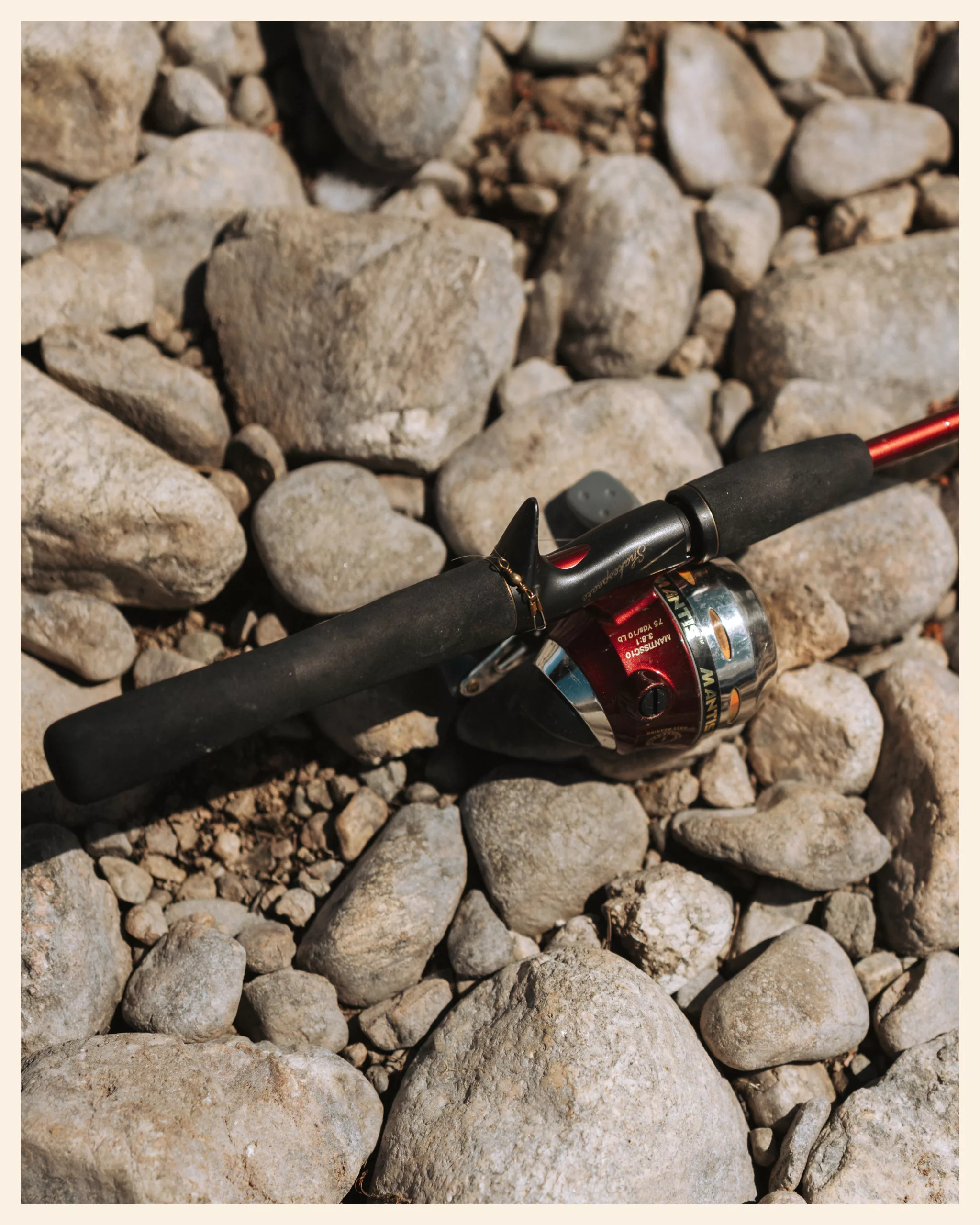
At the water’s edge, Buddy shows us all his gear, proud as a kid. Fly fishing is a budget, techniques, a whole world. He opens a box full of lures, some handmade by enthusiasts, that can cost around a hundred dollars each. Each one imitates a specific insect to attract a specific species. An hour of explanations later, we move on to practice: cast the line, let it drift, reel it in, cast again. Half an hour or so to get the hang of it. I cast, I wait, I reel in… Nothing. Not a single fish. But being there, the three of us, fishing and chatting, is a great moment.
We talk about his daughters, his wife, politics. He tells us about his cancer, which stopped him from finishing his career: he worked in university facilities management. We ask him why “Buddy”. He comes from a Jewish family. As a kid, he didn’t want people to know, and it’s still a bit true today. So he changed his first name. A man full of stories, very moving. We’ll remember him all our lives.


Two kilometers in two hours
This is it: we’re heading onto the Colorado Trail! Since the start of the trip, I’ve been waiting for this moment. Colorado is the state I’m banking everything on, and the Colorado Trail is its legend. In the racers’ photos: passes above 3,500 m, wild mountains… I even dream of crossing paths with the ultra-distance stars entered in the Colorado Trail Race, like Justinas Leveika, who had just broken the Tour Divide record, or Ulrich Bartholmös, winner of the 2023 Tour Divide. Small detail: the race left Denver on August 11, six days earlier. The fastest have already reached Durango.
From Frisco to Copper Mountain, a bike path of about fifteen kilometers: it’s cool, all is well. In Copper Mountain, a mountain bike festival is in full swing, with music and instructors teaching kids to ride. One of them calls out: “The Colorado Trail? It’s gorgeous, go for it, you’ll love it!” The first meters are a bit technical, with rocks and a few hike-a-bike sections (where you have to push or carry the bike). Every route has its difficulties; we’ve seen worse. 500 m, 1 km, 1.5 km… We pass weekend mountain bikers with their dogs. No one tells us it will be complicated with our bikes.
After 2 km, I look at the computer: two hours. Two kilometers in two hours. We stop for lunch. Marie-Liesse wants to turn back: with our bikes, it’s impossible. Me, you know me, I’m stubborn. I want to keep going: up there, it’ll be easier, and so beautiful. Each of us makes our case. Marie-Liesse, far more reasonable than me, wins: we ride back down to Frisco, look at the map and plan another route.
I’m gutted, sick about it. For months I’ve been looking at photos and videos of this race. And since we arrived in Colorado, nothing has gone to plan: the landscapes aren’t what I imagined, I’m sick, and now this. It feels like a curse is stopping me from enjoying Colorado. To get over it, we treat ourselves to an 8-euro soda at the festival. The one upside: the way back is downhill.
That evening, every site at the lakeside campground is booked. Only one is empty: it was booked for three days, and this is the last one. The neighbors reassure us: it was a huge RV with lots of stuff out; if it’s not here tonight, it won’t be back. We settle in. And to lift our spirits after this losing day, we get two Wendy’s burgers delivered… right to our campsite. The neighbors watch us like two big greedy guts. We own it!


A night in the post office
Change of plan: we stay on the Great Divide. An easy start around 10 a.m., via a Julien-made shortcut. Marie-Liesse knows by now: my shortcuts aren’t always shortcuts. We lose a bit of time, but gain one last beautiful view over Frisco. She forgives me. We ride through Breckenridge, a ski resort even fancier than Frisco: 200 euros a night, so we don’t linger. Just enough time to buy new shorts (mine are giving up the ghost) and arm sleeves for Marie-Liesse. In the Great Basin, at 53 °C, I had lent her mine. This time, she has her own!
She breaks them in on the climb up Boreas Pass. Around 4 p.m., we reach the top under a blue sky, with little birds singing. And on the other side of the valley… a monstrous storm, the sky pitch black. At the summit, there’s a hut: closed. No choice, we have to ride straight down toward the storm. We change in a hurry: cap, rain jacket and rain pants, bags covered. We look quite a sight. In ten minutes, we go from “I’m sweating on the climb” to “I’m freezing my backside off in the hail on the descent”.
At the bottom, we reach Como, a hamlet of about ten houses. On Crazy Guy on a Bike, we’d read that the postmistress helps cyclists. On the post office door, a little sticker says: “Welcome bikers”. The door is open day and night, and there’s no one there. It’s pouring. We settle in among the mailboxes, maybe 250 of them: it must be the post office for the whole area. A lady comes by. We ask if it bothers anyone if we sleep here. She jokes: it’s not really a place to sleep, but she won’t turn us in. We set the alarm for 6 a.m. so we don’t bother anyone.
The next day, we put everything back as if no one had slept there. Just as we’re leaving, a man arrives for his mail. He’s really not happy to find us there. We understand: it’s an official building, and no one gave us permission. Even when we tell him about the storm, he stays angry. We make ourselves scarce.
Trucks, a burrito and the storm
Five to ten kilometers of washboard track, those little bumps that shake you in every direction: we ride standing on the pedals. Then a real paved road. We’d lost the habit of sharing the road with cars and trucks. On this road, cars pass trucks while we’re on the shoulder and others are coming the other way. Several times I think: “That’ll never fit.” On the last 500 meters, a truck brushes past us. Marie-Liesse is shaking. They drive at more than 100 km/h; we ride at 30 km/h on a good day. One swerve, and it’s over. So thank you, from the bottom of our hearts, to everyone who signals, moves over or waits behind us until the lane is clear. For a cyclist, it changes everything.
To recover, a gas station like only the United States has: three cafés around it, little shops you wonder how they survive, and peach sellers by the roadside, the local specialty. It’s 10 a.m., we’re hungry: burrito and coffee. That coffee is the first one a total stranger bought us on Buy Me a Coffee, the app that lets you buy us a coffee. Thank you, whoever you are!
Around noon, I feel like stopping for a proper lunch, chairs out, relaxed. Marie-Liesse refuses: “We eat on the bikes.” The sky looks threatening. At 2:30 p.m., the storm is there, straight ahead, and we have to ride through it to reach Salida. We’re in the middle of a huge plain. Friends of ours have been caught in storms with lightning striking close by. And lightning hits whatever sticks up… meaning us. We go for it. Then comes a climb, rain, hail. We put our rain gear back on and push on. At 5 p.m., we’re in Salida, sitting in a little restaurant. These days, our days follow a simple program: storm, food, storm, food.
No reply from Warmshowers hosts: it’ll be a motel. In the United States, even a basic motel costs 60 to 70 euros, sometimes 100. But tomorrow is Marshall Pass, the longest and highest pass on our stretch of the Great Divide: a good bed, a shower and a door that locks aren’t a luxury. At the front desk, Marie-Liesse hands me her bike: “Here, I can feel it, we’re getting upgraded.” She chats with the manager for a long time. Through the window, I see her winking and giving me thumbs up. She comes out with the keys: the manager loves cyclists, he’s given us a better room and booked us an hour in the hot tub. He bought this family motel about twenty years ago, and his goal is for his guests to be happy. In the middle of the motel, he built a little chalet with a sauna, hot tub, steam room and terrace. An hour of paradise for our muscles. In the evening, Marie-Liesse falls asleep with her eyes open.
Tears at the top of Marshall Pass
The climb up Marshall Pass starts badly: 6 or 7 km on a big road, cars going fast, huge RVs brushing past us, even if many drivers cheer us on. It gets very hot very fast. I handle the heat well, and my legs are on fire, in a good way: I devour the start of the climb at 15 to 20 km/h, eager to reach the dirt track. Behind me, Marie-Liesse is suffering; she doesn’t cope well with heat. I wait for her at the turnoff. She didn’t give an inch, despite the pain, the heat and the exhaustion. Since the start of the trip, she has had a mind of steel.
On the track, not a single car. We ride side by side, in nature. We get the drone out to keep a souvenir of the climb, and a huge American military plane flies right over us, very low. If the drone hits its engine, it’s like a bird in a jet engine! Did it come to see what this drone was, or was it just its flight path? I’ll never know. Big scare, drone put away.
We set off again. And my backside hurts. A lot, like after 500 km in one go. I don’t say anything to Marie-Liesse, so as not to dampen her spirits. One or two kilometers from the top, as at the end of every climb, I switch on my speaker. I put on my motivation music, hardcore metal I never usually listen to, but it gives me goosebumps. I want to reach the top having given everything, down to the last pedal stroke. I reach the sign, at 3,305 m, and let it wash over me. The tears just flow; I cry like a kid. A kid proud of himself, who gave it everything.
Then Marie-Liesse arrives, in tears too. These 30 km of climbing are the longest climb of her life. I get off the bike to capture the moment. A big hug, congratulations, and we already have to go: the rain is coming. The descent to Sargents is pure bliss.
Sargents is a gas station, a restaurant and a campground by a river. We pitch the tent and devour a burger, one of the best of my life. Night falls, it’s very cold. Tomorrow, we leave the Great Divide.


Jennifer, Randy and the bulls
In the morning, breakfast at the gas station restaurant, so hearty we can’t finish our plates. The night before, the waitress, brand new, had charged us half price by mistake: we went to see her to pay the rest. We’d really hit it off with her, and we would have liked to say goodbye.
To reach Grand Junction, there are 250 km left. Through the mountains, that’s another five or six days fully self-supported, and we don’t have the energy anymore, with my stomach not healing. By road, it’s big, dull highways where we’d risk our lives for nothing. So we hitchhike in front of the gas station, with a sign: “Gunnison or Grand Junction”. After an hour, the waitress shows up. Her name is Jennifer, it’s her day off, and she offers to drop us off. Bikes in her van, 50 km of road, and time to get to know each other: she’s from Texas and moved here for the fresh air and the mountains.
In Gunnison, it’s harder. The town is bigger, people are in a hurry, and no one is heading west: bridges are under construction and closed for several hours a day. It starts to rain. A huge car pulls up, towing an enclosed trailer several meters long, clearly full of livestock. The driver is Randy; he raises bulls in Montrose, on our way. “I’m happy to take you, but your bikes will be practically in with the cows. And I don’t know if I’m heading home tonight. I’ll let you know in five hours.” It’s 1:30 p.m. At the same moment, a gas station employee tells me off: you’re not allowed to stay more than an hour. Getting kicked out of a gas station: we didn’t know that was possible. Marie-Liesse’s morale is through the floor.
We have lunch, we wait, no news. At 5 p.m., a text: “All good, I’ll come pick you up.” The bikes just about fit in the back. With his trailer, he can’t cross the bridge, even when it’s open: we take a long detour on small roads. Three hours in the car, and plenty of time to ask our questions to an expert, given that we’ve been passing cows every day since arriving in the United States.
On the way, Randy asks where we’re sleeping in Montrose. At the campground, we told him at the start. The more we talk, the more we sense he wants to offer something else. In front of the campground, he slows down: “If you haven’t booked, come and sleep at my place. I live alone.” For dinner, no need to buy anything: “I’ve got good meat in the fridge.”
First, we drop off the bulls, bought in Gunnison, in their pen. They’re already gigantic, and he’ll fatten them up before selling them. He unloads them gently. About ten animals in a huge pen: he’s no industrial farmer, he takes care of them, all the way to the slaughterhouse. That’s the reality of his job, and that’s how people make a living here, where, as Randy and Jennifer explain, you work in skiing, farming or restaurants. In the evening, he grills us his meat, from his own animals. We go to bed with full bellies.


Greg, the hospital and two doctors
When we wake up, Randy won’t let us leave by bike: the road to Delta has almost no shoulder, and cars fly along it. He drops us there, claiming he has business to do. I really think he made the round trip for us. A simple man, and unusually kind.
In Delta, Greg, our Warmshowers host in Grand Junction, comes to pick us up. Nearly 2 m tall, 60 years old, muscles everywhere, the walk of someone who knows where he’s going: a real Goliath. We’re thrilled to be at his place, especially since my stomach still isn’t better despite several days off the bike. Greg recommends Doctor On Demand, an on-demand medical consultation service. An appointment at the hospital. The verdict: a bacterium, probably picked up from the Great Basin reservoir water, which we had filtered, with cows grazing all around it. The signs were there. Antibiotics to pick up the next day.
The next day, it’s Marie-Liesse’s turn: a horrible night. To avoid imposing too much on Greg and his partner, we switch Warmshowers hosts. The ride is less than 2 km, and we still have to stop halfway, at a providential public toilet. Our new hosts are two retired doctors. Their advice: share my treatment, since we drank the same water. We stay a few more days to get back on our feet. They even invite us to an outdoor music festival, and we go.
Before we left, Greg told us about a little project… I won’t say more here: Marie-Liesse tells the story in Utah.
The first day of the Kokopelli
To reach the Kokopelli Trail, we cross Colorado National Monument: huge red rock cliffs, eagles circling overhead, and layers of color on the rock, as if water had marked its level there, year after year. A first attempt, the day before, ended with a flat tire for Marie-Liesse. This time, our hosts ride with us to the top of the climb, and we say goodbye.
National Park, National Monument: what’s the difference? A National Park is created by a vote of the US Congress. A National Monument can be decided by the president alone, thanks to a 1906 law, the Antiquities Act. The Statue of Liberty, for example, is a National Monument. In theory, parks protect large landscapes, and monuments protect a historic, scientific or cultural site. In practice, the line is blurry.
We have lunch in the shade, a peanut butter wrap, waiting for the heat to drop. The day before, we watched the video of Lachlan Morton’s record on the Kokopelli: just over 11 hours. Crazy landscapes, and a route that looked rideable. We’re planning three days for 254 km and 4,630 m of climbing (bikepacking.com version). Not a holiday, but there’s no way we’re ending on the failure of the Colorado Trail. The Kokopelli takes its name from a figure in Native American cultures: a hunchbacked flute player, his hair swept back, who brings good luck to those who listen to his music. We’ll need it.
The mountain bikers we meet at the start encourage us: “Go for it, it’s an incredible experience!” We ask them if it’s doable with the weight of our bikes. Yes, yes, go for it. They’re out for the day, with no luggage. I still wonder whether it was the American mentality (“you can do anything if you want it badly enough”), or whether they had no idea how much weight we were hauling.
The start goes well. Then come the big rocks. We have to climb with the bikes, carrying them together. We’re used to it; it’ll be a short section. Except it goes on for kilometers. Marie-Liesse is exhausted; she can barely walk. So I change tactics: I move my bike forward, go back for hers, and do the stretch again. Two round trips for every bit of trail. Night falls, no one has any strength left, and it all falls apart: we shout at each other. I end up telling her: “Go and sit on a rock, drink some water, rest, I’ll handle the bikes.” Seeing the state we’re both in, we decide to stop there.
Problem: there’s nowhere to camp. We pitch the tent on biological soil crust, the living desert soil made of lichens, mosses and bacteria. It fixes carbon and nitrogen, and stops the wind from blowing the soil away. We hate damaging it. Marie-Liesse goes to bed without dinner. I eat alone, sitting on a rock, under one of the most beautiful starry skies of my life. My headlamp has stopped working, and I’m starting to get a bit paranoid: I scan the darkness around me, in case a mountain lion wanders by. Tomorrow will be a better day… well, I hope so. Marie-Liesse tells what happens next, in Utah.


What we take away from Colorado
Colorado didn’t give me what I expected. No Colorado Trail, days spent doubled over, a storm almost every afternoon. But it gave me something else: an orange handed down from a tractor, a fishing lesson on someone’s birthday, a night at a bull rancher’s, and a kid’s tears at the top of Marshall Pass. I wanted a sporting feat; I got a journey. And proof, once again, that Marie-Liesse has a much stronger mind than mine.
Practical info for a bike trip in Colorado
The Great Divide in Colorado: route and passes
- Terrain: forest roads, long but steady passes (Boreas Pass and Marshall Pass follow old railroad grades), and a few very busy stretches of paved road, where cars drive fast and close.
- The passes: Boreas Pass tops out around 3,500 m (11,481 feet) and Marshall Pass at 3,305 m (10,842 feet). It’s hot going up and cold coming down: keep a warm layer and your rain jacket within reach.
- Brush Mountain Lodge: a legendary Great Divide stop near the Wyoming border. The rooms are expensive, but you can camp in the garden.
- Resupplying: Steamboat Springs, Frisco, Breckenridge and Salida have everything you need. Between towns, services are scarce. In Sargents, a gas station with a restaurant and campground, on Highway 50.
Colorado Trail bikepacking with a loaded bike
- The route: about 780 km between Denver and Durango for hikers, 867 km by bike according to bikepacking.com, because of the detours around the six wilderness areas closed to bikes.
- Terrain: lots of single track (a narrow trail), rocks and hike-a-bike. With our 45-to-50-kg bikes, we covered 2 km in 2 hours before giving up.
- Our advice: ask cyclists loaded like you, not mountain bikers out for the day. And if your bike weighs as much as ours, stay on the Great Divide.
Afternoon thunderstorms
- The pattern: in August, we had a storm almost every afternoon, often around 2 or 3 p.m., with hail on the passes.
- Our habits: start early, get over the passes in the morning, eat lunch on the bike when the sky darkens, and don’t hang around on the plains, where you’re the tallest thing around. Keep your rain gear on top of your bags.
Water
- Filter everything, and still be wary of reservoirs where cows drink: in the Great Basin, we filtered water from A&M Reservoir, and that’s probably where I picked up my bacterium. Nearly two weeks of stomach pain, a hospital visit and antibiotics.
- When in doubt, add purification tablets or boil the water: a filter isn’t always enough.
Where to sleep in Colorado by bike
- Warmshowers: in ski towns like Frisco, our messages went unanswered. In Steamboat Springs and Grand Junction, we were treated like royalty (thank you Jody, Greg, and our two doctors!).
- Hotels and motels: expect at least 50 dollars a night in Frisco, 60 to 100 euros for a motel in Salida, and around 200 euros in Breckenridge. Always ask if there’s a cyclist discount: in Rawlins, it worked; in Frisco, it didn’t; in Salida, we got a better room and the hot tub.
- Campgrounds: plenty of them, but often booked in summer around the lakes. Arrive early, or ask the neighbors whether a reserved site is really taken.
Hitchhiking with a loaded bike
- Gas stations are the best spots: people stop there and have time to chat. But some don’t like you staying more than an hour.
- A sign with your destination helps a lot, and a pickup or van easily takes two bikes.
- Patience: an hour in Sargents, almost four hours in Gunnison. And two unforgettable encounters.
Colorado, between railroads and monuments
- Boreas Pass follows the old narrow-gauge Denver, South Park & Pacific railroad, completed in 1883 between Como and Breckenridge. At the top, the section house, built in 1882, has become a hut (History Colorado).
- Marshall Pass is named after Lieutenant William L. Marshall, who surveyed it in 1873. The railroad crossed it in 1881 and was abandoned in 1953 (Wikipedia).
- Colorado National Monument was created on May 24, 1911 by President Taft. John Otto, who had fought to protect it, became its first custodian, for one dollar a month (NPS). Its scenic road, Rim Rock Drive, is 37 km (23 miles) long.
- National Park or National Monument? Only Congress can create a National Park. The president can create a National Monument, thanks to the 1906 Antiquities Act: the first was Devils Tower, in Wyoming, that same year (NPCA).
- The Blue Mesa bridge, on Highway 50 between Gunnison and Montrose, was closed in April 2024 after cracks were found. During the summer, a single lane reopened, to cars only: trailers like Randy’s had to take a long detour (CPR News).


Your questions about bikepacking in Colorado
It’s very hard: the trail is narrow and rocky, and you often have to push or carry the bike. With our 45-to-50-kg bikes, we covered 2 km in 2 hours before turning back. It’s for a light bike, or on foot.
From the Wyoming border to Sargents, it took us 12 days, 8 of them on the bike, for about 500 km, counting a sick day, a stretch by car and an attempt on the Colorado Trail. The Great Divide then continues toward New Mexico.
A National Park is created by the US Congress. A National Monument can be created by the president alone, thanks to the 1906 Antiquities Act. Colorado National Monument was created in 1911 by President Taft.
In summer, when the passes above 3,000 m are clear. Expect stormy afternoons and cold nights at altitude. Start early and get over the passes in the morning.
In campgrounds, with Warmshowers hosts (rarer in ski towns), at Brush Mountain Lodge on the Great Divide, or in motels, from 50 to 60 dollars a night.
The episodes to listen to (in French)
Episode 15: “Malade dans le Colorado” (Sick in Colorado) (Rawlins and darts, the border, Brush Mountain Lodge, the storm to Steamboat Springs, the sick day and the farmer’s orange)
Episode 16: “On abandonne…” (We give up…) (the canoe truck to Frisco, Buddy and fly fishing, the Colorado Trail failure, burgers delivered to the campground)
Episode 17: “Orages et cols de montagne” (Storms and mountain passes) (Breckenridge, the night in the post office, the trucks, Salida and its hot tub, Marshall Pass)
Episode 18: “Une nuit chez un cowboy” (A night at a cowboy’s) (Jennifer and Randy, Greg and the hospital, Colorado National Monument, the first day of the Kokopelli)
They’re all on our podcast page, on Spotify, Apple Podcasts and Deezer. The episodes also tell what I left out here: our calls to Jean-Mi from the post office, my explanations about desert crust… Before Colorado, there was Wyoming, told by Marie-Liesse. Next up, with a broken rack, Lake Powell by kayak and two days with almost no water, it’s Utah. To support the blog, it’s this way!

This site uses Akismet to reduce spam. Learn how your comment data is processed.
Leave a Reply