Bikepacking in Montana: From the Border to Helena
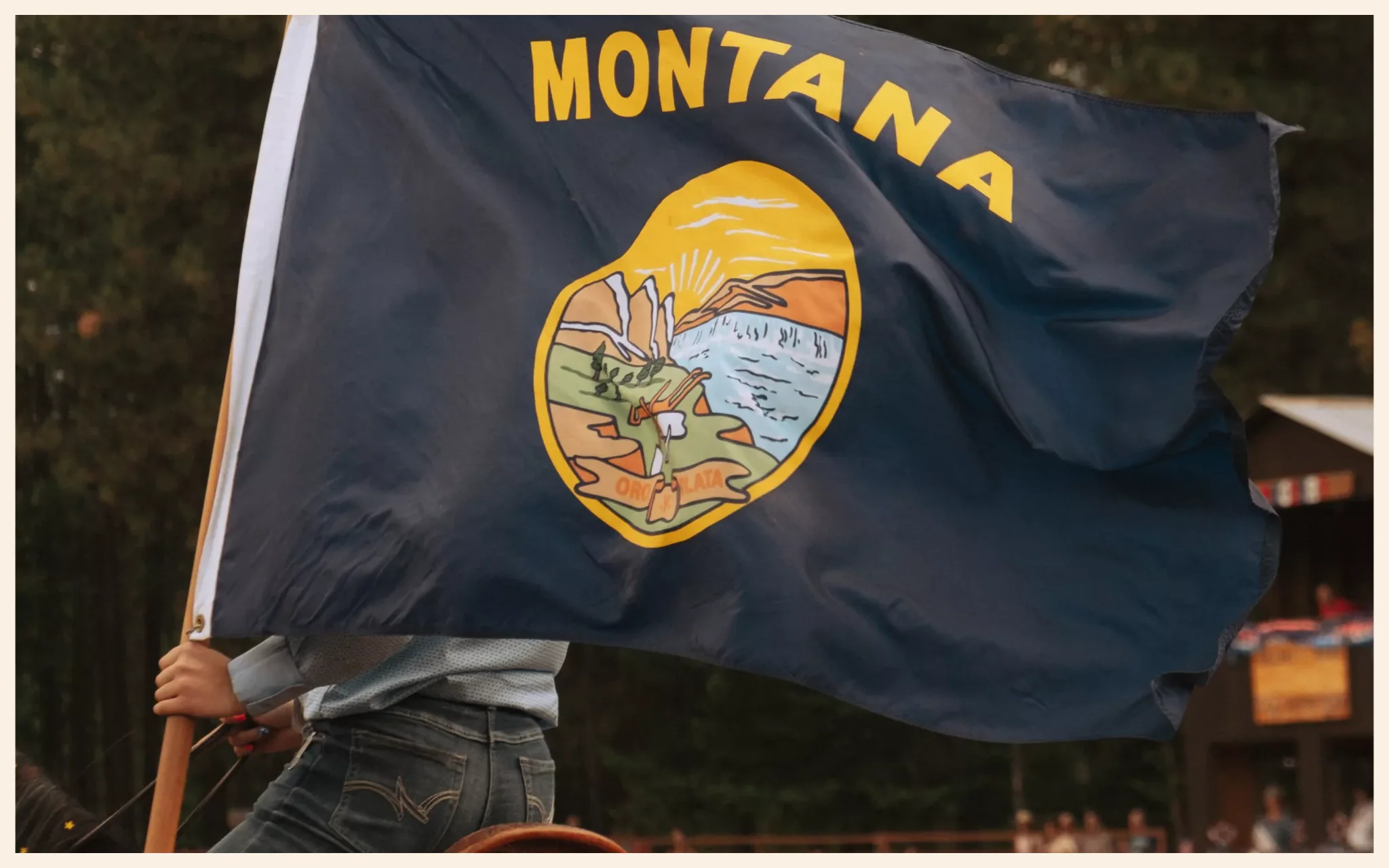
Montana was the first U.S. state we cycled through, and it’s the state that made us fall in love with the United States! In late June 2024, we crossed the Canadian border at Roosville, near Eureka, then followed the Great Divide Mountain Bike Route (GDMBR) through the Rockies to Helena, the state capital: 636 km and 7,935 m of elevation gain in two weeks. Along the way: sneaking through a ranch, a night in jail, a llama ranch without any llamas, and our first rodeo.
In the podcast, Marie-Liesse and I shared our first impressions with Jean-Mi. Here, I’ll highlight the moments that stood out the most to us, and I’ll give you everything you need to know to go biking in Montana: the route, the stops along the way, the bears, where to stay (often for free), and why you should never pack your camping stove with your tortillas.
In a nutshell
- When: June 29–July 12, 2024, as a pair, right after the Canadian section of the Great Divide.
- The route: the Great Divide from the Canadian border (Roosville, near Eureka) to Helena, via Whitefish, Bigfork, Seeley Lake, Ovando, and Lincoln, with a few detours along the way.
- The route: 636 km and 7,935 m of elevation gain over 10 stages (49 hours in the saddle), including commutes: our short trips around town on rest days, in Whitefish and Helena.
- Accommodations: at the homes of Americans we met along the way, at campgrounds that are often fully booked in the summer ($25 per site at Holland Lake), at the old prison in Ovando, and at the Llama Ranch, where everything is free.
- Bears: Grizzlies and black bears also live in the Montana Rockies. Always keep bear spray within reach and food away from your tent.
- Folklore: a Fourth of July parade in Condon and a rodeo in Helena. Break out your cowboy hat!


Our Cycling Itinerary in Montana
- Eureka → Dan and Dawn's place in the mountains: 50 km and 699 m of elevation gain—our first climbs in the U.S.
- At Dan and Dawn's → Red Meadow Lake → Whitefish: a long climb through the fog, followed by a descent along the lake. A rest day (and a rainy one) in Whitefish.
- Whitefish → Bigfork: 76 km, almost all on paved roads.
- Bigfork → Condon: a gravel pass, followed by a night at Veterans Camp Ponderosa, near Condon.
- Condon → Holland Lake, by road, on July 4.
- Holland Lake → Seeley Lake, via gravel trails and singletrack.
- Seeley Lake → Ovando: 51 km, under a blazing sun.
- Ovando → Lincoln: 63 km.
- Lincoln → Llama Ranch: 38 km, including an hour of pushing the bikes.
- The Llama Ranch → Helena: 70 km and over 1,000 m of elevation gain, in 38 °C heat. Three days of rest at Scott and Dawn’s, and a rodeo.
| Day | Step | km | D+ | Weather |
|---|---|---|---|---|
| 1 | Eureka → at Dan and Dawn's place | 50 km | 699 m | 4:26 a.m. |
| 2 | At Dan and Dawn's → Red Meadow Lake → Whitefish | 69 km | 822 m | 5:11 a.m. |
| – | Commute to Whitefish | 3 km | 24 m | 12:00 a.m. |
| 3 | Whitefish → Bigfork | 76 km | 589 m | 5:04 a.m. |
| 4 | Bigfork → Veterans Camp Ponderosa, near Condon | 66 km | 1,044 m | 5:47 a.m. |
| 5 | Veterans Camp Ponderosa → Condon → Holland Lake | 44 km | 345 m | 2:32 |
| 6 | Holland Lake → Seeley Lake | 62 km | 1,013 m | 5:15 a.m. |
| 7 | Seeley Lake → Ovando | 51 km | 592 m | 3:50 |
| 8 | Ovando → Lincoln | 63 km | 806 m | 4:34 |
| 9 | Lincoln → Llama Ranch | 38 km | 723 m | 3:11 |
| 10 | Llama Ranch → Helena | 70 km | 1,006 m | 5:42 a.m. |
| – | Stops in Helena (2 days) | 42 km | 272 m | 3:03 |
| Total from the border to Helena | 636 km | 7,935 m | 48h47 |
The times listed are ride times, excluding breaks, and “commutes” refer to our short trips around town on rest days. All our routes are on the “Route & Stats” page, under “Banff > Sargents,” and details for each day are on Julien’s Strava profile.


Montana on the Great Divide
The Adventure Cycling Association, which mapped out the Great Divide, divides Montana into two maps: from Roosville to Helena, and then from Helena to Wyoming. It describes this first section as the most challenging of the entire route: a succession of mountain passes in the Rockies, forest trails stretching as far as the eye can see, and a town where you can restock supplies only every four or five days (Adventure Cycling Association).
Our plan, on the other hand, can be summed up in one sentence: follow the Great Divide for about half its length, then head toward the West Coast—Las Vegas, Los Angeles, and San Diego. First the mountains, then the beach!
Our Experience in Montana
The Wild West, Customs Style
Two kilometers from the border, a gate blocks our path. There’s no sign—or maybe we just chose to ignore it. We open it. Behind it lies a ranch yard, a pickup truck, and a man who freezes when he sees us burst onto his property: two cyclists laden with panniers, waving enthusiastically at him, all smiles. By the time he regains his ability to speak, the gate is closed on the other side, and we’re pedaling like never before! Here, as we know, the owners often have a rifle.
Why take this shortcut? Because Marie-Liesse’s hands are still sore from her fall in Fernie, and every pebble on the official trail makes her arms ache. So we improvise. And that day, our improvisation leads us right into the middle of an American’s property!
At the Roosville border crossing, another question is on our minds: what if the farmer had called? The customs officer, for his part, is interested in something else. Five months on the Great Divide? He’s never seen anyone take that long. Suspicious! We’re ushered into a room with bare walls, where agents watch us from a distance and come back, one by one, to ask us the same questions. We put on our best poker faces. Forty-five minutes, a fingerprinting session, and $30 later, the door opens onto the United States.
Eureka, the first town, is nothing like a postcard: run-down motels, an almost empty street, and no one to let us set up camp in their backyard. So we do what everyone else here does—we sit down to our first burger. Huge, glistening, delicious! It’s the waitress who finds us a place to stay—or rather, a patch of grass: a small park on the outskirts of town where cyclists can camp. The only rule: watch out for the automatic sprinklers in the morning. Welcome to the Wild West!


Dan, Dawn, and Godzilla
Our first day in the U.S. can be summed up in three numbers: 50 km, 699 m of elevation gain, and zero places to sleep. The forest cabin we spotted on the map requires an online reservation, and we’ve had no cell service since this morning. In any case, it’s occupied. So is the next one. A driver slows down next to us to confirm this, politely but firmly: around here, you have to make a reservation. The nearest campground is twenty kilometers away. Uphill, of course!
We veer off the trail, running out of energy and ideas, when we spot a white-bearded giant bustling about in his garden. We ask him, a little timidly, if he knows a spot where we can pitch our tent. He smiles: “Right here. Stay at my place.” ” His name is Dan. He lives with his wife, Dawn, and their two dogs in a wooden cabin deep in the mountains, cut off from the world in winter under two meters of snow. At the far end of the garden sits an old trailer with flat tires. Two mattresses, a little dust, a roof—it’s the Ritz!
The cabin, where Dawn offers us a shower, is entirely focused on the TV. Fox News is broadcasting by itself in front of an empty couch. There’s no dining table, just rifles on the walls and Dan’s parents’ hunting trophies. At the back of the yard, a small, closed door piques our curiosity. A bunker? An armory? “The generator,” Dawn assures us. We nod. We don’t believe a word of it!
At night, I sleep with one eye open. Dan casually mentioned the grizzly bear that sometimes wanders through the yard, and that’s all it takes for me to imagine a Godzilla-like monster lifting our trailer like a can of soup. In the morning, the only monster in sight is a stack of pancakes, with bacon and eggs with runny yolks.
It was then, between bites, that Dawn set a set of keys on the table. Her house in Whitefish has been empty since her son’s death. “Go there and rest as long as you like.” We’ve known her for less than twenty-four hours!


Whitefish, the house that's making waves
The road to Whitefish looks like a TV show set. A long climb, then a descent through the mist, between fir trees whose tops we can’t see. Not a car in sight, not a sound: it feels like we’re in Twin Peaks. On the shore of Red Meadow Lake, a two-minute chat with some fly fishermen costs us about ten mosquito bites. Then the sky opens up, and we’re hit with the first real downpour of the trip. Marie-Liesse slips on her rain pants. As for me, I figure we’re almost there. I arrive soaked to the bone.
Dawn’s house has all the hallmarks of a Montana home: deer and bear heads on the walls, rifles, a huge kitchen. There’s also something frozen about it. On the living room table is a photo of her son, and his ashes right behind it. Above our bed, a giant poster of Donald Trump watches us sleep. Or rather, watches us not sleep: an hour after I fall asleep, I hear a dull, steady thud in the hallway, like spinning blades. There’s no fan. I turn the light back on, and I don’t turn it off again.
The next day, it’s raining, so we stay. Dawn stops by with her granddaughters and tells us about her son, who died during a helicopter transfer between two hospitals. The rotor blades. I don’t say anything. Marie-Liesse, on the other hand, still laughs about it. As for me, I already believed in ghosts: that night only confirmed it.


On July 4, you'll celebrate in Condon
The plan was perfect: two gravel mountain passes in one day, and the 4th of July by Holland Lake, watching the fireworks. The first pass was enough to wear Marie-Liesse out. Between the two, a campsite sent a chill down our spines: belongings scattered everywhere—someone lives there year-round—and not a soul in sight. We didn’t linger. We raced down to the road, where Veterans Camp Ponderosa, a camp for U.S. military veterans, opens its lawn to all travelers. The manager shares two pieces of news with us. The bad news: there haven’t been any fireworks at Holland Lake for years. The good news: in Condon, just a few kilometers away, there will be a parade, a meal, and horseback riding events. Change of plans!
At 10 a.m., Condon is decked out in festive decorations. Floats, horsemen in costume, and pickup trucks decked out with star-spangled banners parade through the town. We’re in the thick of the presidential campaign, in a state where Donald Trump is right at home, and the parade also feels like a campaign rally: one float ridicules Joe Biden, and “Make America Great Again” hats are everywhere. To our European eyes, it’s a shock. We see a country split into two camps that no longer speak to one another.
At the parish potluck, where everyone chips in what they can, dozens of T-shirts display three letters: “MFT.” We bet it stands for “Montana For Trump.” Wrong! The real meaning, which is revealed to us with a laugh, is much less political and much more flowery. In the afternoon, children on their ponies, followed by riders galloping at full speed, take part in one speed event after another. “It’s just like a rodeo,” a neighbor whispers to us. That’s all it takes: we want to see a real rodeo.
In the evening, Holland Lake treated us to a splendid sunset and swarms of mosquitoes. We spent the evening swatting at them (for a good cause), then filling the camp with smoke from a small fire. A couple who was leaving gave us their campsite, which they had already paid for. The sheriff, however, still demanded his $25. We set our alarm for very early!


Seeley Lake, square dancing, and gas-flavored tortillas
As they leave Holland Lake behind, the trail winds its way along a single track—a path so narrow that only one bike can pass at a time. On the descent, it’s mesmerizing: tree trunks flash by, the forest belongs only to us, and Marie-Liesse experiences the defining moment of her journey. For the first time, she feels completely at home, to the point of having tears in her eyes. Around a bend, a man is sitting on the ground, in the middle of nowhere. Dom, a yoga instructor from San Diego, is riding the trail back toward Canada. He gives us his number and a riddle: “I slept in jail. You’ll see!”
At noon, our tortillas taste like gasoline. I’d also packed the stove and the gas canister in the food bag. What a rookie mistake! We make up for it that evening with a burger in Seeley Lake, where the campground has been fully booked for months. Jeff, one of the volunteer hosts, who was off that day, rode his bike around the campsites to see if he could help us out. To no avail. He came back, exchanged a glance with his wife Ellen… and set us up next to their RV. We had dinner with two retirees who travel the world to square dance, and we learned that we were their first guests in two years.


Behind Bars in Ovando
The next day, as early as 9 a.m., the sun knocked Marie-Liesse out. Fortunately, it’s only 51 km to Ovando, a tiny village that’s come back to life thanks to cyclists on the Great Divide. There’s a repair shop, a small museum, and three unusual beds reserved for cyclists: a teepee, a shepherd’s wagon, and the old prison. First come, first served. Dom’s mystery is solved: tonight, we’re sleeping behind bars!
The museum guide reminds us, however, that not everything in Ovando is fun and games. In July 2021, a cyclist was killed by a grizzly bear in the middle of the night at the village campground. Since then, everyone here has been repeating the same rules to travelers: no food in the tent, and always keep bear spray within reach. We listen intently, have dinner at a real Fargo-style diner, where a waitress makes her rounds with a coffee pot in hand, and then we go to bed in the “prison,” hoping no bear comes knocking on the door!


The Llama Ranch, Without Llamas
For days now, every cyclist we’ve passed coming the other way has been telling us the same thing: “Stop at the Llama Ranch. ” The ranch is worth the effort. It’s hidden behind a “hike-a-bike” section—a climb where you have to push your bike instead of pedaling—and legend has it that John, one of the owners, has a certificate waiting for the first cyclist to make it up without putting a foot down. With our panniers, our drone, and our computers, that certificate will stay in the drawer!
We ride for an hour in the cool air, then the ranch comes into view at the bottom of a valley with scorched grass: a large house, cabins, two alpacas (there are no more llamas), dogs, geese, and a self-service fridge stocked with cold drinks and sandwiches. Barbara has been welcoming cyclists here for twenty-five years. John, on the other hand, arrived eight years ago by bike while riding the Great Divide. He never left!
Everything here is free, and donations are not accepted. Barbara and John ask for only one thing: pay it forward. The $20 you would have paid for your cabin—give it to someone else, or simply volunteer your time. That evening, in the large cabin we chose, we promised each other we wouldn’t forget it.


Helena, 38 °C in the shade
The 70-kilometer ride to Helena ends on a busy, noisy highway, with temperatures at 38 °C. Marie-Liesse, who hates the heat, arrives completely exhausted. None of the Warmshowers hosts have responded, fatigue takes its toll, and we get into an argument like we haven’t had since we set out. Then, at the last minute, a response comes in.
Scott and Dawn are a movie-perfect couple. He: stocky, with a thick mustache, the son of a military man, speaking in three-word sentences. She: a floral dress, a laugh that fills the house, and a picture-perfect garden where hummingbirds come to drink. It’s like something out of *Desperate Housewives*. A safe sits prominently in our bedroom. “About fifteen guns,” says Scott. Then, after thinking it over: “Maybe thirty.” He opens it. It’s an arsenal, with a gun designated for every room in the house. Just in case.
As the days go by, Scott cheers up. He shows us the two-seater plane he’s restoring in his garden shed, hoping one day to take off from his own field. He tells us about the wildfires—we can see the smoke rising from the mountains. Global warming? “Bullshit.” Then he brings up Muslims, using words we won’t repeat here. I don’t bring up a third topic. We part ways as friends, though: in Montana, you learn to share a roof without sharing the same ideas.
On Friday night, he takes us to the rodeo. Metal bleachers, beer, a crowd in hats and cowboy boots, and a program that starts… with kids clinging to sheep! Then come the barrel races, the lassoing, and eight seconds of holding on with one hand to a bull that isn’t having it. We clap, we shudder, and the calf, tied up in a matter of seconds, tugs at our heartstrings a little. We’ve finally seen our rodeo!


In hindsight
We entered Montana fearing armed and suspicious Americans. We left with the keys to a house lent to us by a stranger, a night in jail, a self-service fridge at the bottom of a valley, and a list of first names we’ll never forget: Dan and Dawn, Jeff and Ellen, Barbara and John, Scott and Dawn. There were certainly guns, and ideas very different from our own as well. But everywhere we went, we found an open door!


Practical Information for a Cycling Trip in Montana
Crossing the Border and Obtaining a Visa
- We entered the United States at the Roosville border crossing, north of Eureka, where the Great Divide runs.
- With an ESTA authorization, you can stay for up to 90 days. To give ourselves plenty of time, we applied for a B1/B2 tourist visa at the U.S. Embassy in Paris, which allowed us to stay for up to six months.
- At the land border, expect questions, fingerprinting, and a fee ($30 for us). Be prepared with a clear answer about your itinerary and departure date: five months by bike—that’s intriguing!
- "No Trespassing" signs are everywhere. Don't cross the ranches, even if you're two kilometers from the border.
Topography and Terrain
- Between the border and Helena, there is an average elevation gain of 1,300 m per 100 km (7,639 m over our 590 km of stages), with steep climbs and often hot weather.
- Before you reach Llama Ranch, plan on about an hour of hike-a-bike: you'll have to push your bike.
- Around Seeley Lake, the trail follows single tracks. If you're injured or tired, paved roads offer alternative routes, such as between Whitefish and Bigfork or between Condon and Holland Lake.
Bears in Montana
- Grizzly bears and black bears live in the Montana Rockies. In July 2021, a cyclist was killed by a grizzly bear in Ovando, in the middle of the night, at the village campground.
- Never keep food or anything with a strong smell in your tent, and use the bear-proof lockers at campgrounds.
- Keep your bear spray within reach, day and night.
- A request to residents and cyclists traveling along the trail: please report any bears you see.

Where to Stay in Montana While Cycling
- Campgrounds: In the summer, many are booked up and fully reserved months in advance, as is the case at Seeley Lake. Expect to pay $25 per site at Holland Lake. Volunteer campground staff can help you find a solution.
- Forest Service cabins: You can reserve them online. Make your reservation while you still have a signal, because it disappears quickly in the mountains.
- Places for cyclists: the prison, the trailer, and the teepee in Ovando; the Llama Ranch (free, in exchange for doing a favor for someone else); and the small park in Eureka (watch out for the morning watering).
- Warmshowers: The network works, but in big cities like Helena, responses may come at the last minute.
- Staying with locals: Just ask with a smile. That's how we met Dan and Dawn, and then Jeff and Ellen.
Heat, mosquitoes, and logistics
- In July, it was as hot as 38 °C when we arrived in Helena. Leave early and bring plenty of water.
- Around the lakes (Red Meadow Lake, Holland Lake), the mosquitoes are a real nuisance: use insect repellent, wear long sleeves, and build a small fire in the evening.
- Further north, around Whitefish, expect rain and fog.
- Never store your stove and gas canister with your food.
- Download your maps offline: cell service is limited in the mountains.
- When it comes to eating, burgers, pizzas, and diners are everywhere, but the prices are high. One “medium” American pizza is enough to feed two hungry cyclists!
The Five-Event Rodeo
Rodeos are a Montana tradition, and summer is the season for them. Here's what you'll see in the stands:
- Mutton busting: Children try to stay on a sheep for as long as possible.
- Barrel racing: completing a course around three barrels as quickly as possible.
- Tie-down roping: The cowboy lassoes a calf, jumps off his horse, and ties its legs together.
- Steer wrestling: The cowboy jumps off his horse onto a young steer and pins it to the ground by its horns.
- Bull riding: staying on a bull for eight seconds with just one hand, under the watchful eye of the rodeo clowns.


Your Questions About Bikepacking in Montana
At the Roosville border crossing, north of Eureka, where the Great Divide Mountain Bike Route passes through. Be prepared for questions, fingerprinting, and an entry fee.
With an ESTA, your stay is limited to 90 days. To stay longer, you’ll need a B1/B2 tourist visa, which you can apply for at the U.S. Embassy: ours allowed us to stay for up to six months.
At the Llama Ranch, between Lincoln and Helena, where they won’t accept money and ask you to return the favor to someone else. But also by staying with locals through the Warmshowers network, or simply by asking if you can pitch your tent.
Yes, grizzly bears and black bears. We’ve only seen four since Calgary, but a cyclist was killed by a grizzly bear in Ovando in 2021. Keep food away from the tent and always have bear spray within reach.
We covered 636 km and 7,935 m of elevation gain in two weeks: 10 stages, plus a few commutes during our rest days in Whitefish and Helena, for a total of about 49 hours in the saddle.
We were there from late June to mid-July: long days, lakes, Fourth of July celebrations, and rodeos—but also mosquitoes and heat waves reaching up to 38 °C in Helena.
Episodes to Listen To
Episode 5: “Our First Steps in the Wild West” (the frontier, Eureka, Dan, and Dawn)
Episode 6: “A Folkloric National Holiday” (Whitefish, July 4 in Condon, Holland Lake)
Episode 7: “A Night in Jail” (the single track, Dom, Jeff, and Ellen, Ovando)
Episode 8: “Spit On by a Llama” (the Llama Ranch, Helena, the rodeo)
They’re all on our podcast page, on Spotify, Apple Podcasts, and Deezer. The episodes also cover things I didn’t include here: Lincoln, “medium” pizzas served as “large,” the travelers we met at Scott and Dawn’s place… The rest of the story, from Helena to Wyoming, is in Part 2 and Episodes 9 through 11! For more stories, click here, and to support the blog, click there!

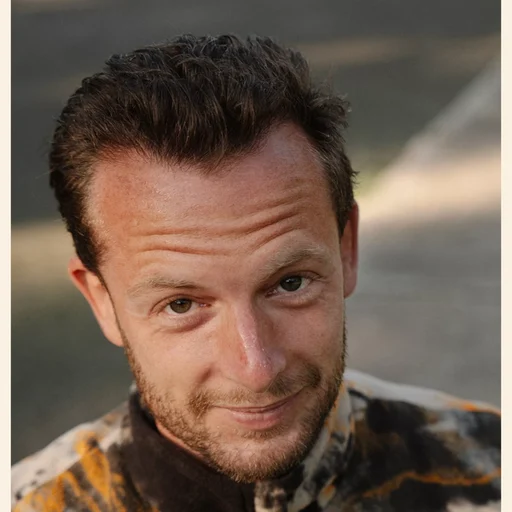
Julien Roche
Julien Roche, co-founder of Fast Won't Last. Since June 2024, he has been cycling across the Americas with Marie-Liesse, from Canada to Patagonia, focusing on off-road trails and camping. He chronicles the journey on the duo’s blog and cycling adventure podcast.
This site uses Akismet to reduce spam. Learn how your comment data is processed.
Leave a comment