The story at a glance
in 9 days
on day 5
Elevation gain, day by day
day 1: 4,800 ft, day 2: 1,800 ft, day 3: 2,200 ft, day 4: 2,200 ft, day 5: 2,600 ft, day 6: 410 ft
Nevada is where the desert gave us its most beautiful waves… and Las Vegas its biggest letdown! In early October 2024, after Utah, Marie-Liesse and I crossed one last pine-covered plateau, then dropped down to Mesquite, its palm trees and its air-conditioned McDonald’s. We then rode through Valley of Fire, slept on the shore of Lake Mead, and finished in Las Vegas: 196 mi (315 km) and 13,800 ft (4,217 m) of climbing in six stages.
On the podcast, Marie-Liesse and I told Jean-Mi everything while it was still fresh. Here, I look back on the moments that stayed with us most, and give you what you need to know to bikepack Nevada: the route, the stages, the heat, where to sleep, and how to ride into Las Vegas without ending up under a pickup truck.
In short
In short
- When: October 7 to 15, 2024, just the two of us, then four of us in Las Vegas with our friends Clotaire and Pierre.
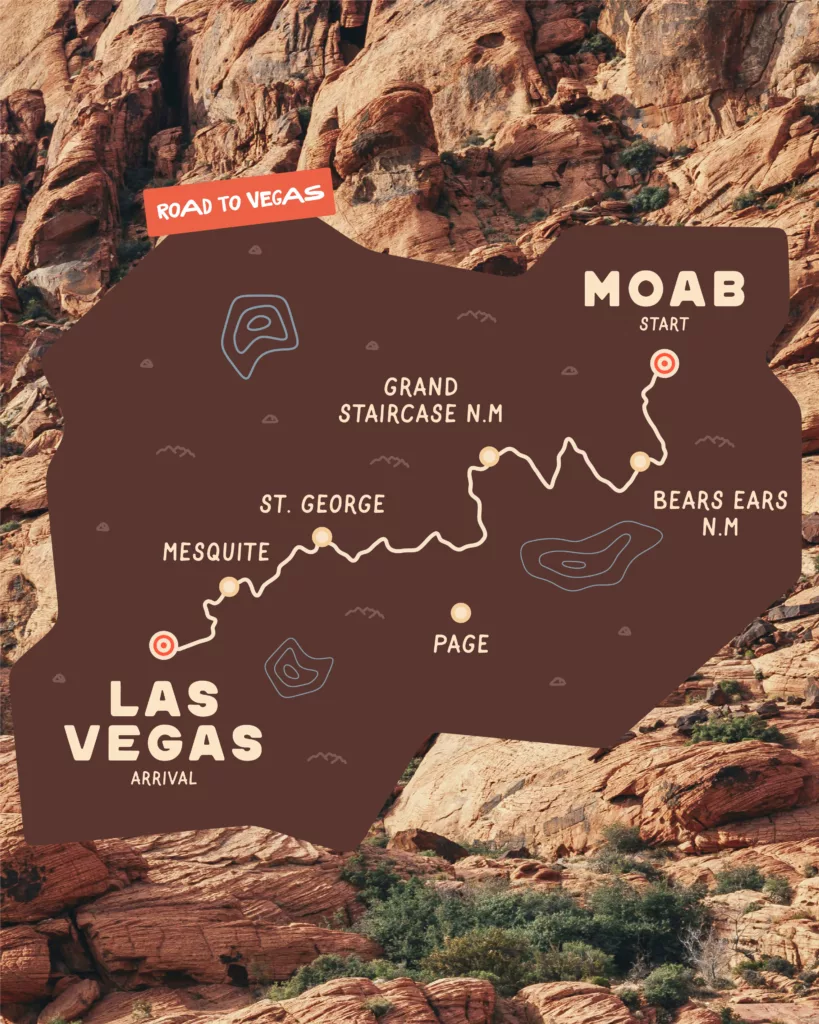
- The route: from St. George (Utah) to Mesquite on the Plateau Passage, Valley of Fire, Echo Bay on Lake Mead, then Las Vegas.
- The numbers: 196 mi and 13,800 ft of climbing (315 km and 4,217 m) in 6 stages (27 hours in the saddle).
- The people: Carl and his two sons, Christy, our Warmshowers host, and Alexa, her voice assistant, who runs the whole house.
- Sleeping: alone in the desert, under a shelter at the entrance to Valley of Fire, at Carl’s in Echo Bay, at Christy’s, then at Circus Circus for 20 dollars a night.
- The challenge: the heat. In mid-October, it’s already 97 °F (36 °C) at 9:30 a.m. in Valley of Fire.
01 · The route
Our Nevada bikepacking route
The roadbook
DistanceElevation
Total, short rides included196 mi13,800 ft
Times are moving times in the saddle, breaks not included.
| Day | Stage | Distance | Elevation gain |
|---|---|---|---|
| 1 | St. George → camp on the plateau | 37 mi | 4,800 ft |
| 2 | Camp on the plateau → Mesquite (Nevada) | 30 mi | 1,800 ft |
| 3 | Mesquite → Valley of Fire | 32 mi | 2,200 ft |
| 4 | Valley of Fire → Echo Bay (Lake Mead) | 35 mi | 2,200 ft |
| 5 | Echo Bay → Las Vegas | 37 mi | 2,600 ft |
| 6 | Las Vegas: Christy’s → Circus Circus → the Strip | 25 mi | 410 ft |
| Total, short rides included | 196 mi | 13,800 ft |
Since Hurricane, Utah, we’d been following the Plateau Passage, a route of about 1,200 miles (1,930 km) created by the nonprofit Bikepacking Roots between Las Vegas and Durango, Colorado. Its last section, between St. George and Las Vegas, is about 212 miles (341 km), according to MTB Project. It leaves the Utah plateaus to plunge into the Mojave Desert, which starts here: a flat desert dotted with cacti and palm trees, very different from the red rock canyons we’d just left. We followed it to Las Vegas, via Valley of Fire and Lake Mead.
Our tracks
Routes and GPX tracks
This story’s track, to follow or download on Ride with GPS.
-
01Moab → Las Vegas2 segmentsUtah Arizona Nevada
02 · On the road
Our story in Nevada
Red, orange, purple
It’s 5 a.m., and we’re already on the bikes. We want some cool air for today’s climb, which promises to be epic. And on climbs, Marie-Liesse and I talk about colors. Not because we’re into painting: our Garmin GPS colors the track by difficulty. Green is easy. Orange or red stings, and we work out how long we’ll be stuck there. On the Plateau Passage, some sections are flat-out purple. We grin and bear it, and push.
“The other game is reading the tracks on the ground.”
The other game is reading the tracks on the ground. Car tires? The trail will stay rideable. Motorbike tires? Bad sign: 4x4s can’t get through anymore. Bike tracks? Then you’re guaranteed a slog! On the rock ledges, we divide up the work: I lift the front, Marie-Liesse pushes the back, and we get through.
Then we reach the plateau, and everything changes. No more desert: a conifer forest, cool air, and a fast trail. We never have to put a foot down! I feel like the United States has space-time rifts: in the morning, you’re pushing through rock; in the afternoon, you’re flying between pine trees. We don’t even stop for lunch. Water is still a worry, and we haven’t seen anyone. So we ride until the sun drops behind the hill across from us, to keep tomorrow’s descent to Mesquite as short as possible. Tonight, we sleep alone in the wild, putting into practice everything Clotaire taught us during our weeks together.
Six hours at McDonald’s
The next day, we knock out the last few miles in two hours. This time, we each have two or three liters of water left: Utah’s lesson has sunk in. A few technical sections on big slabs of smooth, sloping rock feel like a water slide. Good thing it hasn’t rained! Not that there’s any chance of that: in this region, it won’t rain for months.
At the bottom, Mesquite, Nevada. And palm trees! The first of the trip, and instantly a bit of a vacation feel. The landscape has changed: no more red rock, just flat desert, big cacti and lone palm trees. We’d been warned: you reach Las Vegas through a very arid desert.
Best of all, Mesquite has a McDonald’s. I’m not here to advertise fast food, but a 3-dollar drink, free wifi and the AC cranked up for an entire afternoon, when you’ve just come out of the desert, is paradise. We stay for six hours. We call our families and friends, and recharge every battery, ours included.
Waves of stone
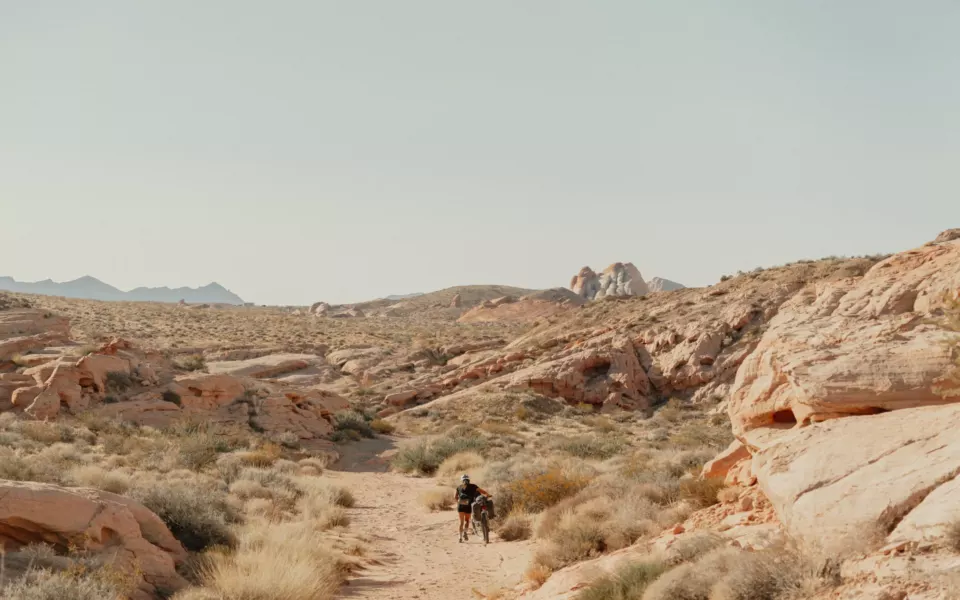
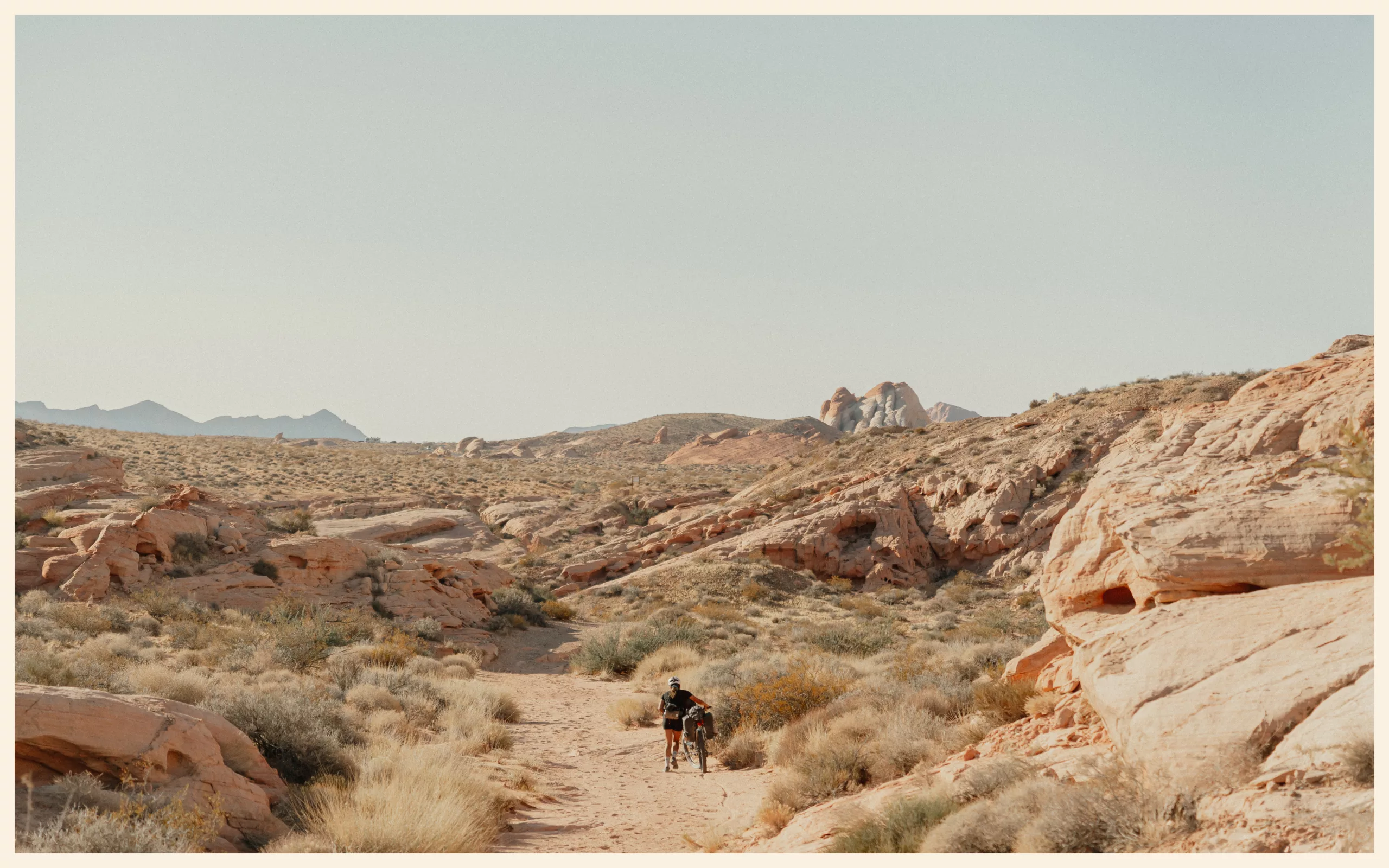
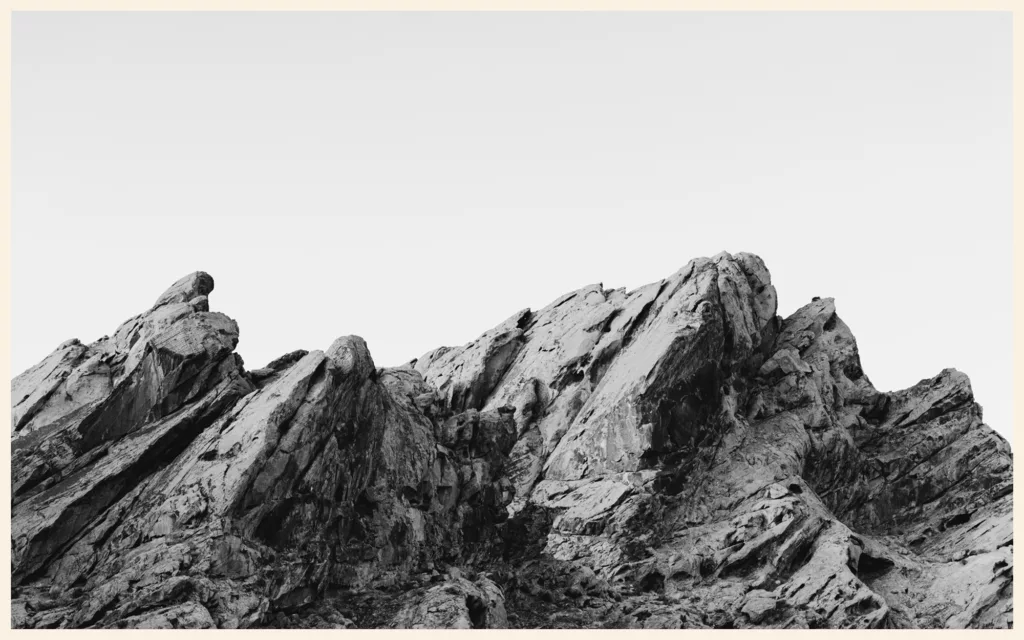
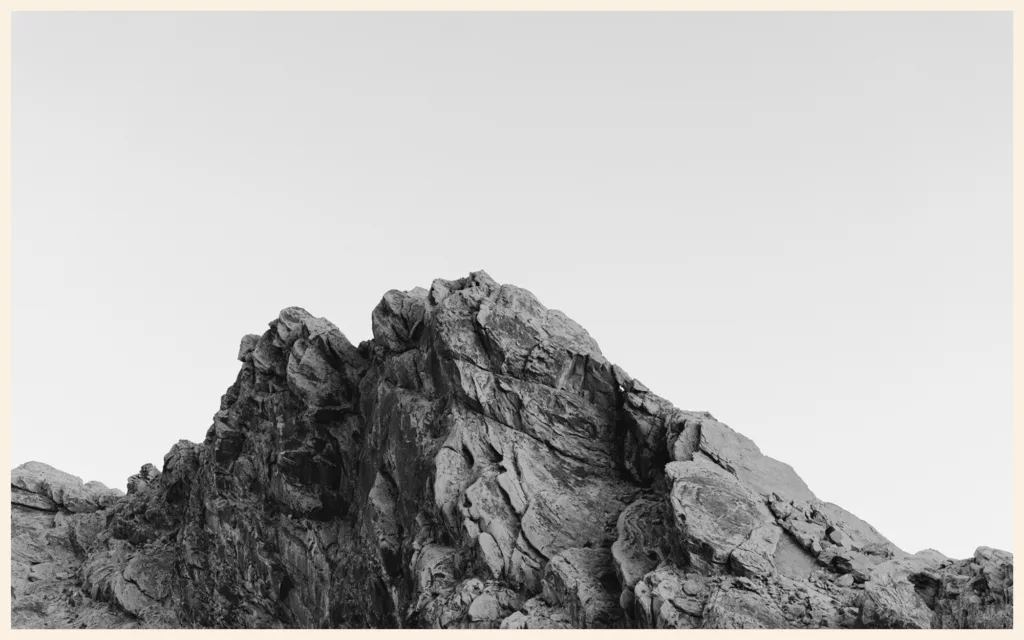
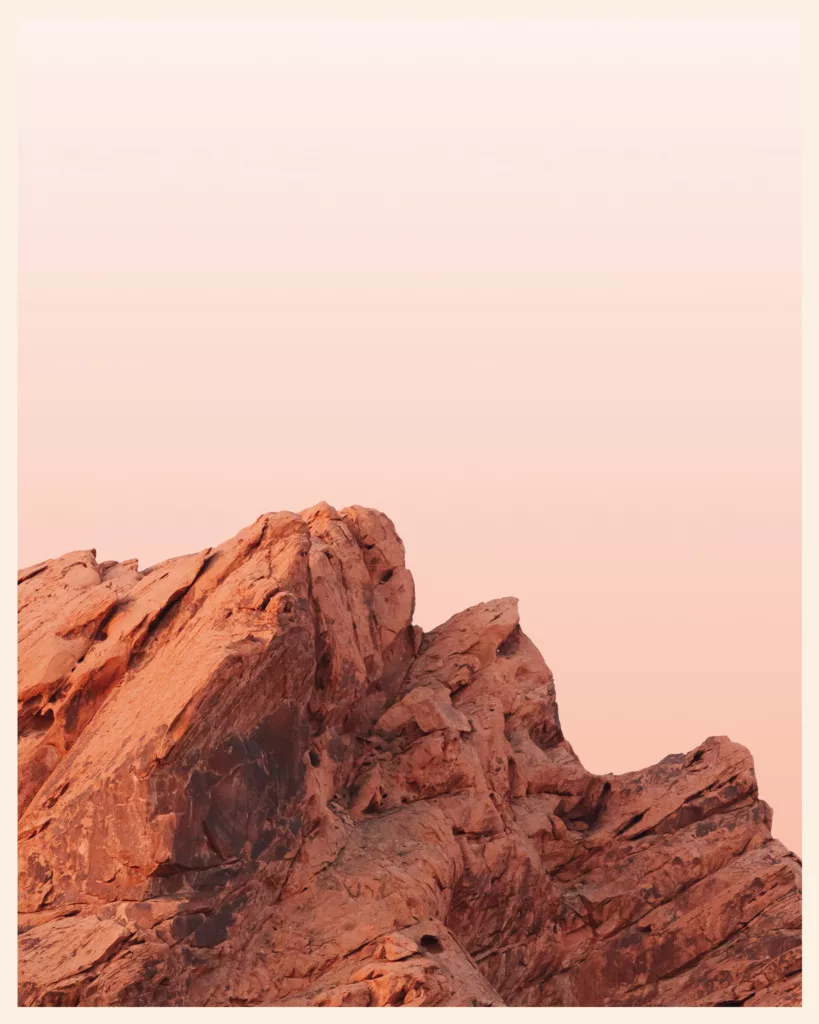
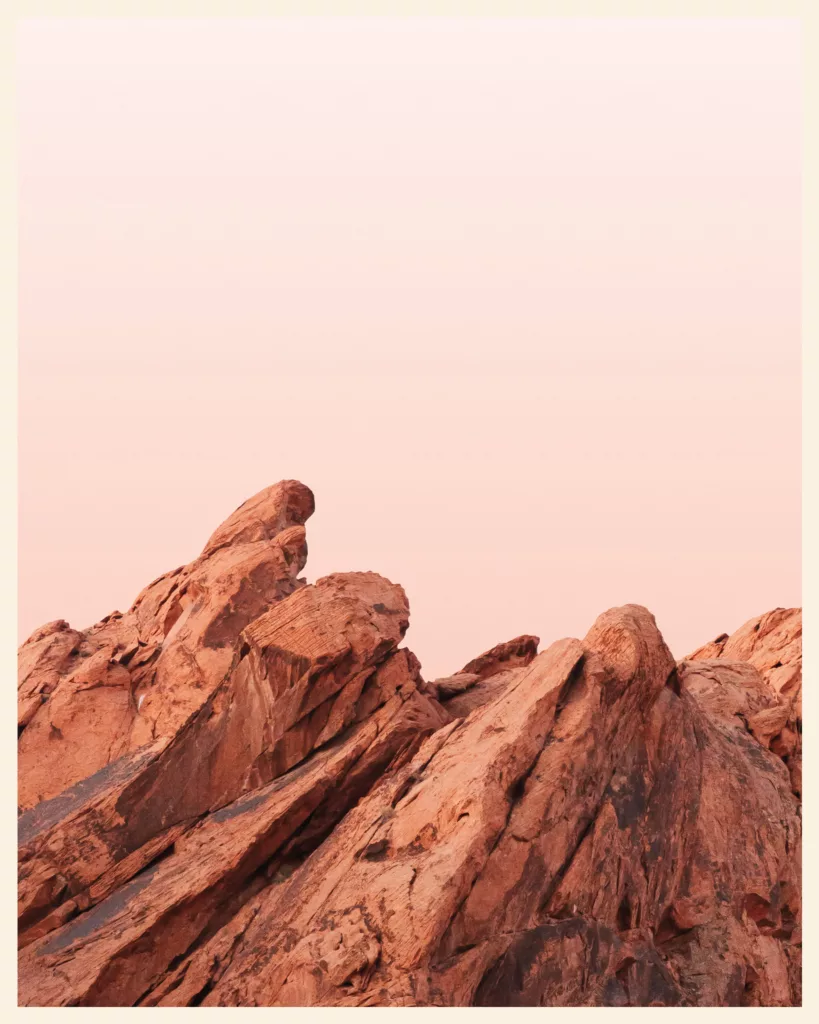
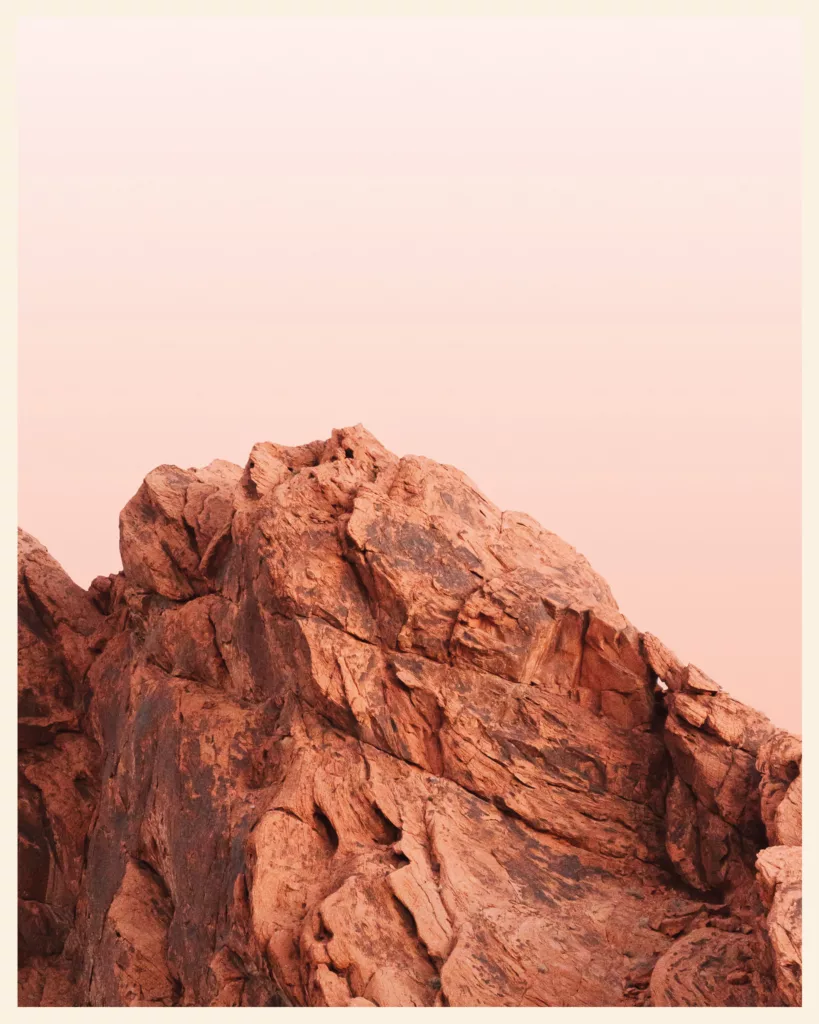
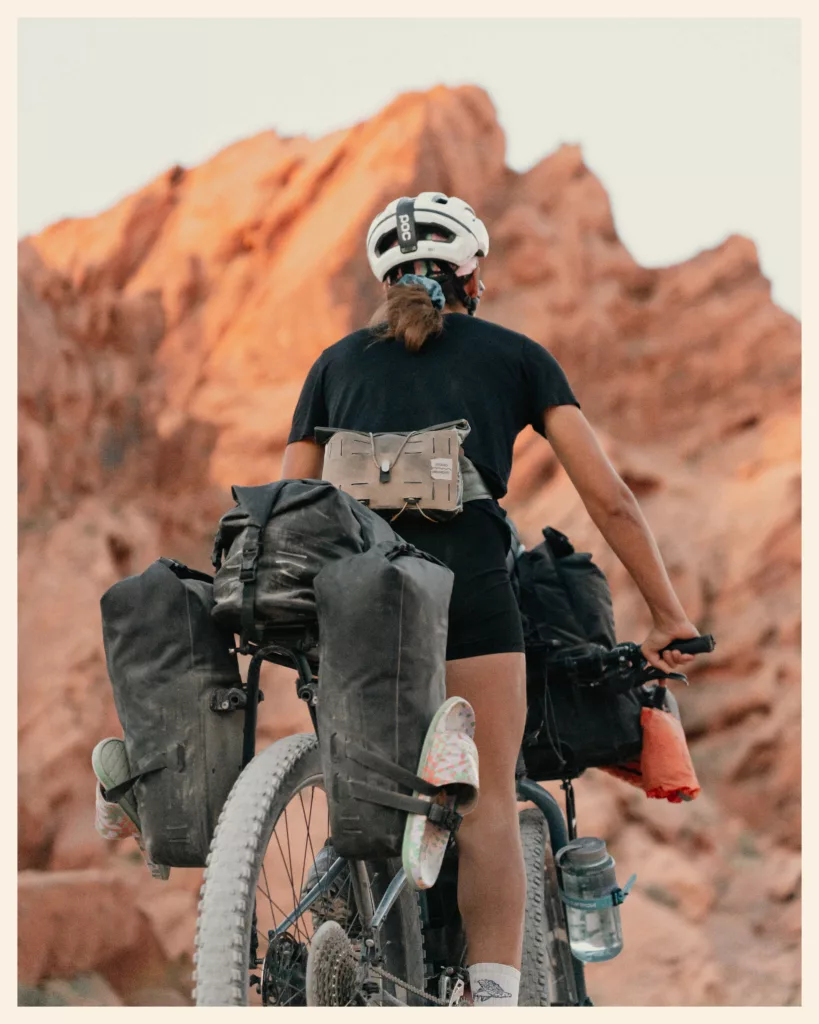
In the evening, we settle in at the entrance to Valley of Fire, under a shelter with benches. Picture yourself on a sailboat in the middle of the Pacific, in a raging sea. Waves of 30, 50, 65 ft (10, 15, 20 m), bent by the wind, charging straight at you. Valley of Fire is just that, but in rock: red, sharp, almost aggressive waves. At sunset, as we set up camp, they catch fire. We have instant tomato rice for dinner, with not a sound around us, under an incredible starry sky.
Not quite alone, actually. A small off-road buggy pulls up near us. At the wheel, a 14- or 15-year-old who can’t figure out how to turn around. His father gets out, red as a tomato, clearly tipsy, and starts yelling instructions at him on how to turn the wheel. A good five minutes of maneuvering later, the whole family shows up: Carl and his two sons, Ivan and Levi. And then, a complete turnaround. Carl hands us bottles of water, Cokes, Gatorades (no alcohol, don’t worry), food, and asks where we’re from, where we’re going, whether we need anything at all. He’s given himself a mission: to help us. We chat for a good twenty minutes, then night falls and they leave: “We’ll probably see you on the road.”
Watching them go, I think to myself that they’re a very touching family. The father was a bit aggressive, because he’d been drinking, but you can see he cares about his kids, that he loves them dearly. I think he’s going through a hard time in his life, and alcohol helps him forget.
“If you’re torn between a road bike and a gravel bike, there’s my argument!”
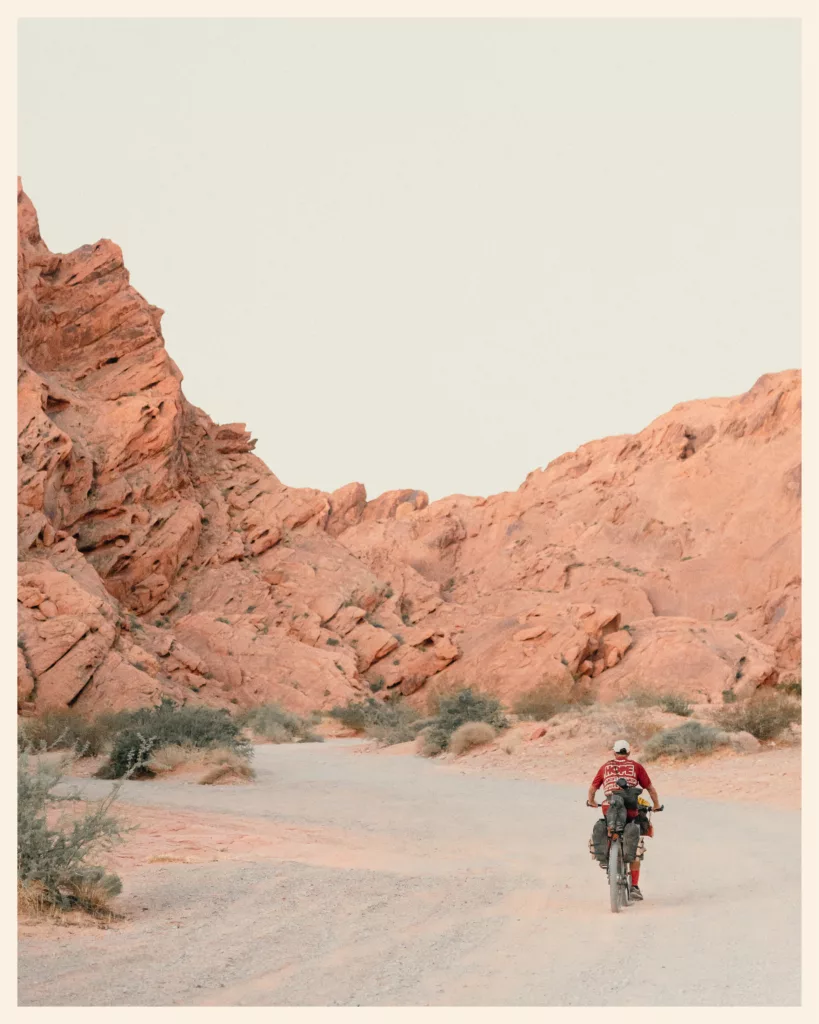
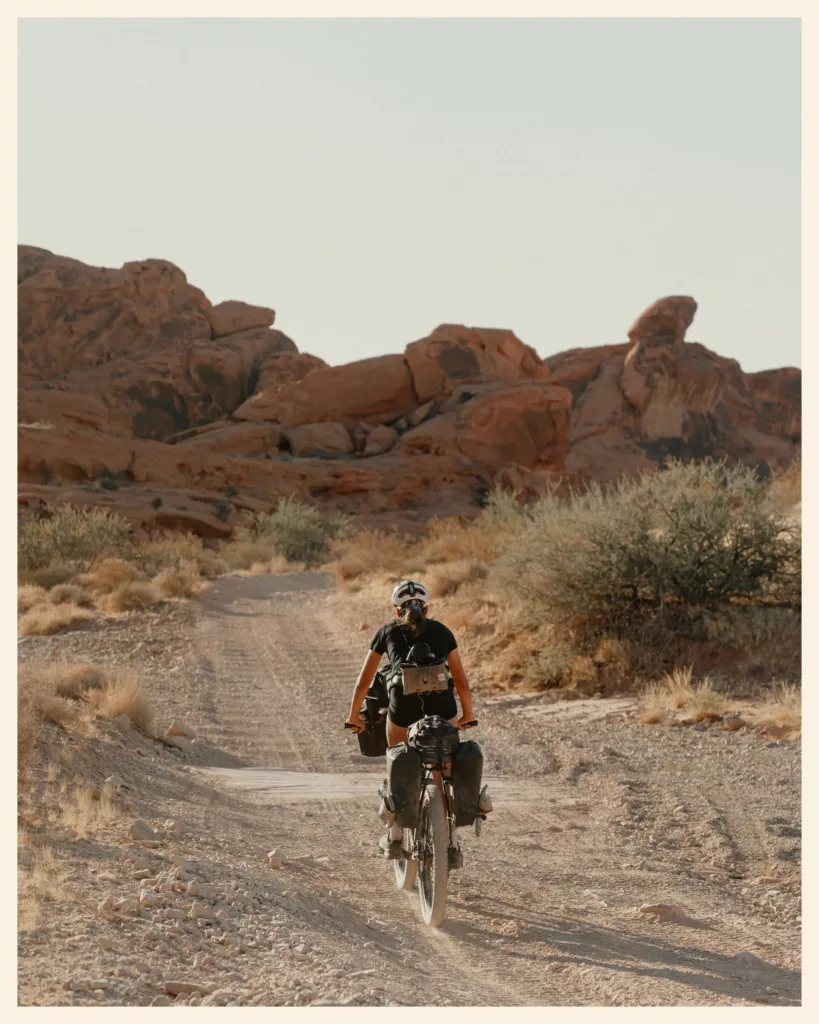
The next day, we leave at 5 a.m. to cross the park at sunrise, on a trail cars can’t use: only bikes and dirt bikes are allowed. Not a soul. Then we join the paved road, the one West Coast road-trippers take: three viewpoints, a photo out the window, and off they go. On our fat tires, we’d ridden through sand and over rock, alone in the world. If you’re torn between a road bike and a gravel bike, there’s my argument!
At 9:30 a.m., it’s already 97 °F (36 °C). We take refuge in the park visitor center to wait out the heat. Visitors give us fresh fruit and vegetables. Plan for the rest of the morning: nap!
S’mores at Echo Bay
In the afternoon, we find a small oasis: a tiny creek running through the middle of the desert. It smells a bit odd, so we don’t swim, but hearing running water after weeks of desert feels amazing. And who do we see coming? Carl and his sons, who’d been watching the road to find us! They invite us to sleep at their place in Echo Bay, on Lake Mead. It’s the house of Carl’s father, who lived there almost all year round and passed away a few months ago. This year, they’re spending their vacation there in his honor. “What do you like to eat? We’ll go shopping.” “Whatever you like will be perfect,” we answer. (We were tempted to ask for caviar.)
“Nothing beats an ice-cold Coke at the end of the day!”
Finding the house is another story. Seeing us arrive, sweaty and a bit lost, the community’s caretaker offers us a Coke and some chips. Nothing beats an ice-cold Coke at the end of the day! Night falls, and still no Carl. What if we misunderstood? What’s more, when we said goodbye, we’d noticed Carl had had a bit too much to drink, and he was the one driving, with the kids. Marie-Liesse and I start to worry about him, and especially about the boys. They arrive very late, but they arrive.
Barbecue, delicious meat, homemade mashed potatoes, and our very first s’more: a marshmallow toasted over the fire, with chocolate, sandwiched between two graham crackers (the French version would use petit-beurre biscuits). It’s so sweet you can’t eat many. We eat several anyway!
Carl gives us his room and sleeps on the couch. There’s no changing his mind: he wants us to be in good shape for the road. Before going to bed, he hands us a heavy bag: “Don’t open it until you’re on the road. There are surprises inside.” We promise. On the road, we discover the treasure: chocolate, marshmallows and lots of other treats. Enough to make s’mores again at the next campfire!
Christy, Alexa and the best burger of my life
As we approach Las Vegas, Christy, our Warmshowers host, warns us: “Don’t ride through town, it’s chaos, people drive like maniacs. I’ll come and get you.” While we wait for her, we devour a mountain of Chinese noodles for 6 or 7 dollars. A small red car pulls up, a blonde woman gets out: “Julien, Marie, is that you?” We hit it off right away. She reminds me of Dawn, our host in Helena, Montana: a little bit wacky, and adorable.
Warmshowers is fascinating and sometimes a little dizzying: as soon as you walk through the door, you’re plunged into a family’s private life, and for a few days, you’re almost part of it. At Christy’s, it starts in the car. Sitting in the front, I see a notification pop up on her phone, mounted on the dashboard: “Doctor…”. Christy replies with a voice message: she needs her medication quickly, today or tomorrow. Can she pick it up at the office, or can the doctor send a prescription to the pharmacy? Marie-Liesse and I look at each other. We hesitate to ask her what’s going on, whether everything’s okay. We don’t dare.
At the supermarket, another surprise: to get home, Christy turns on her GPS… even though she lives two minutes away. Then a gate, a guard, an ID check: she lives in a gated community, a sort of rich people’s enclave with huge houses and family photos on every wall. Our room has a bed ten feet by ten (three meters by three, and I’m barely exaggerating): you can sleep diagonally without touching.
The whole house obeys Alexa, Amazon’s voice assistant. A timer for the chicken, another for the vegetables, the day’s news, the music, the dinner reminder at 7 p.m.… And when her husband comes home from work, a voice announces: “Back door open.” After grace, we have homemade burgers for dinner, some of the best I’ve ever had. Her husband tells us about the green 1960s car he’s been restoring for five or six years, and their son and I talk video games for hours.
“What a lesson for anyone who’s racist, homophobic, or rejects others!”
I don’t remember how the subject came up, but Christy tells us about her daughter, who’s away studying in another state. She’s transgender. For Christy and her husband, it was a shock at first. But their love for their child outweighed everything else, without stopping them from practicing their faith and believing in God. That’s what’s beautiful, and that’s what should come first everywhere. She also tells us about the day her daughter, her transition complete, saw her grandfather for the first time as a woman. Already picturing the grandfather losing it? Not at all. He simply said: “Hello ma’am, what’s your name?” That hit me hard. What a lesson for anyone who’s racist, homophobic, or rejects others! That’s Warmshowers too: in a few days, you step into a family’s private life.
Twenty dollars at Circus Circus
Clotaire and Pierre join us at Christy’s, and we spend two days together. Then the four of us head to Circus Circus, a circus-themed hotel-casino. The room costs 20 dollars a night. The casinos’ math is simple: the room costs almost nothing, so you stay as long as possible and spend your money on gambling, shows and drinks.
To get there, we ride through the poorest neighborhoods of Las Vegas. Real ghettos, like in the movies: six-and-a-half-foot (two-meter) giants in white tank tops, sitting on their little chairs outside their houses. We go through a tunnel where many homeless people and drug users live. Here, cannabis is legal, and the whole city smells of weed; but we also see a lot of people on crack. As soon as you step outside the casinos and hotels, Las Vegas is a very, very poor city. Then we pass under a bridge, and the scenery flips: golden towers, Trump Tower, hotels with rides inside. What a crazy world!
We check in at a kiosk, like at the airport, and ride up to the room with our bikes, rolling over a carpet covered in clowns. Then, bikes unloaded, we head out to ride the Strip, the big boulevard of casinos: the Paris, the Luxor, Caesars Palace…
I’ll be honest: I’m disappointed. I’d been to Las Vegas when I was younger, on a three-week West Coast road trip, and I remembered gleaming hotels and a street in full party mode. Today, the paint is peeling, things are falling apart, and completely wasted people wander the street: it feels like The Walking Dead. There’s hardly anyone, no atmosphere, it’s bleak. I think Covid took its toll: the hotels lost a huge amount of money. To top it off, the setup for November’s Formula 1 Grand Prix spoils the view, right down to the Bellagio fountains. But Marie-Liesse wanted to see Las Vegas at least once, and we’d never have flown from Paris for that. Above all, to get there, we rode some incredible roads.
“A month on the road together, learning a huge amount from Clotaire, and speaking French!”
Leaving Las Vegas, we part ways for good with Clotaire and Pierre, who head to Los Angeles to meet a friend. As for us, we’ll pass north of Joshua Tree. A month on the road together, learning a huge amount from Clotaire, and speaking French! We were able to express our ideas more clearly, more deeply. Thanks, guys!
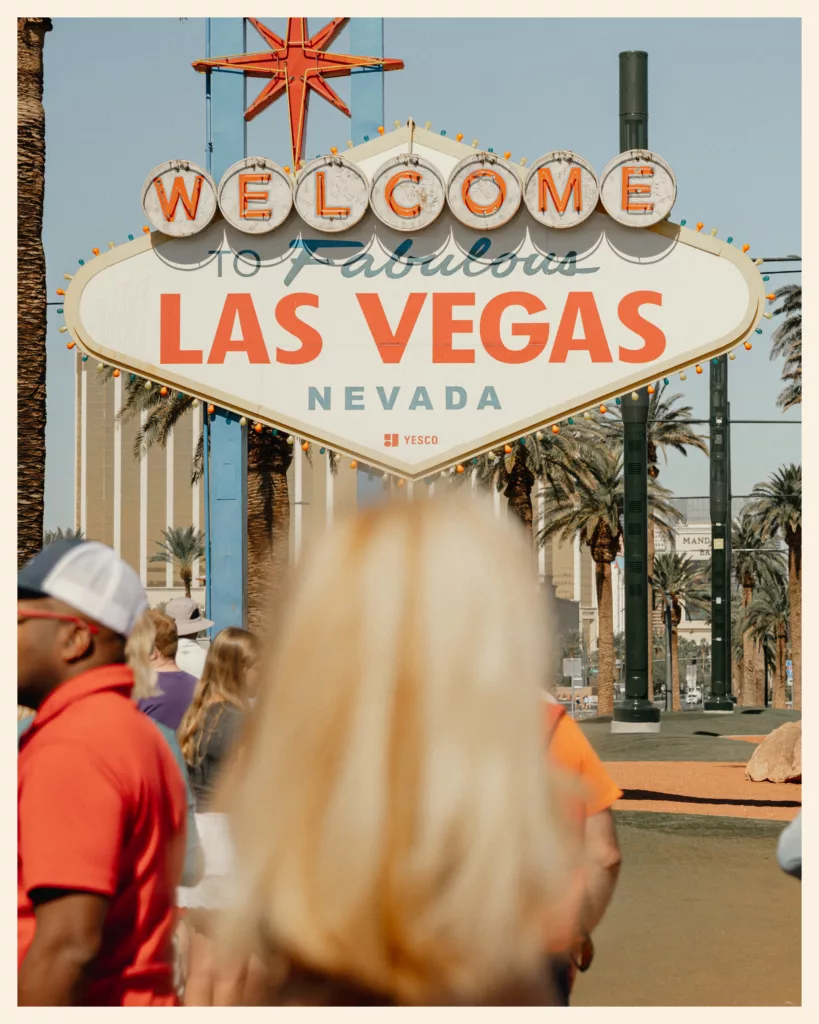
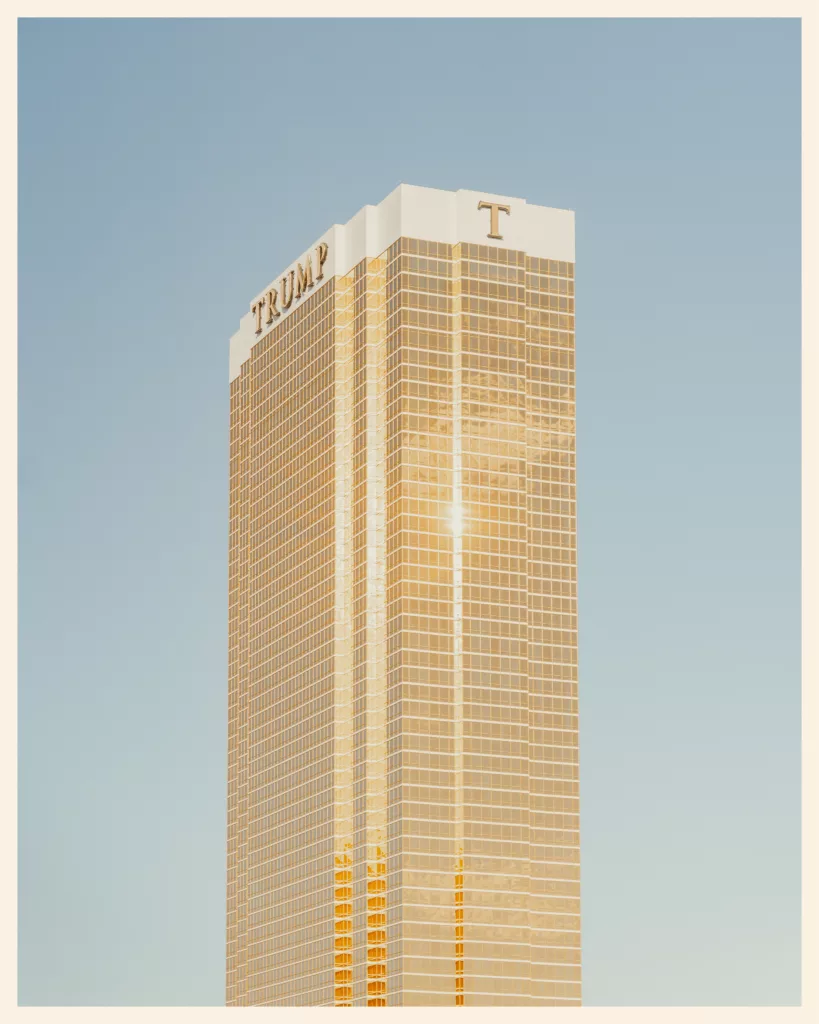
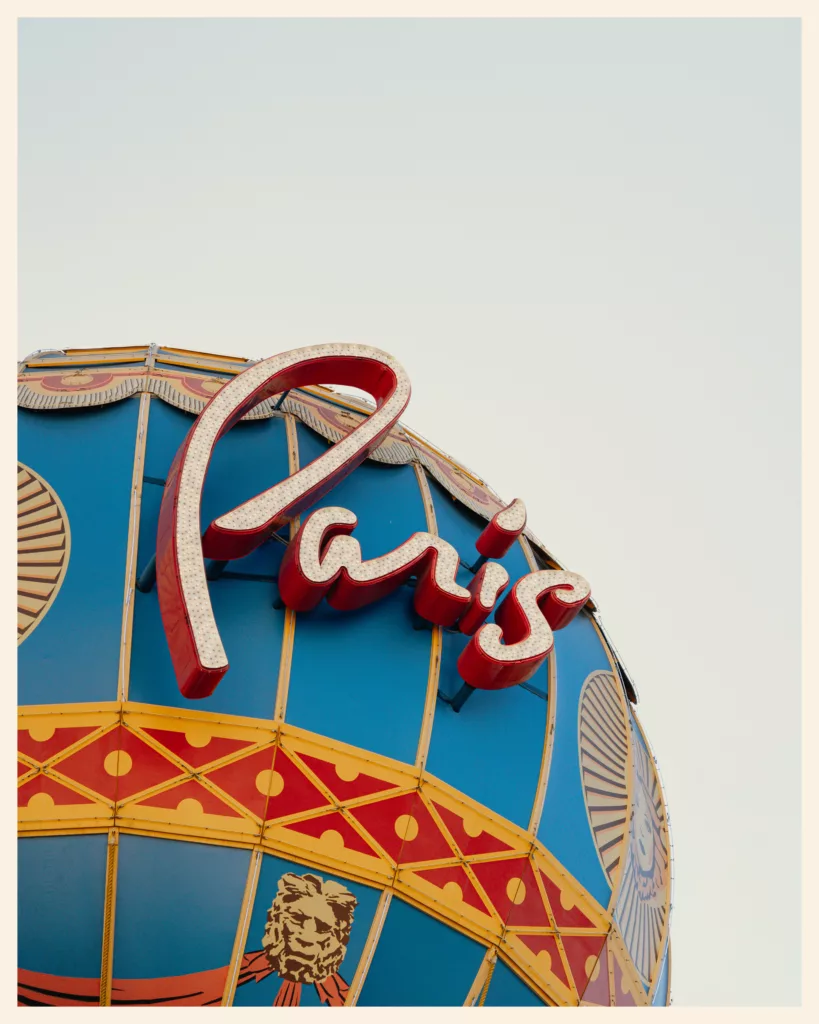
Nevada in pictures
Nevada in pictures
A glimpse: all our photos are in the gallery.
03 · Our takeaways
What we take away from Nevada
Nevada is the land of contrasts. Waves of red rock and palm trees, a buggy that can’t turn around and a father who showers us with gifts, a gated community and a homeless tunnel a few miles apart. Las Vegas let me down, but not the people we met there: Carl gave us his bed, Christy her home. And once again, it was the dirt roads, not the highways, that gave us the best moments.
04 · Practical info
Practical tips for bikepacking in Nevada

often, on the steep sections of the Plateau Passage
The route is for experienced cyclists: rare resupply, very remote areas. Also expect big slabs of rock that are slippery if it has rained.
left each when we reached Mesquite, as a precaution
Water is rare on the Plateau Passage. After Utah, we don’t take risks anymore!

at 9:30 a.m. in mid-October (36 °C)
Cross it at sunrise, before the heat and the cars. The park is very touristy along its paved road, but some trails are only open to bikes and dirt bikes. The visitor center is a good refuge during the hot hours. We slept at the park entrance, under a shelter with benches: check the park’s campgrounds and fees before you go.
our host advised against riding into town
She picked us up by car on the edge of town. If you ride, choose your streets carefully. The Strip by bike is doable, and pretty legendary; in November, the Formula 1 Grand Prix setup blocks part of it.
a night at Circus Circus, in October 2024
Hotel-casinos can be very cheap, because they count on you spending at the casino. Warmshowers works well too.
its supermarkets and fast food
After that, there’s not much until Las Vegas.
05 · Questions
Your questions about bikepacking in Nevada
Can you ride through Las Vegas by bike?
Can you visit Valley of Fire by bike?
What is Valley of Fire?
How do you ride the Plateau Passage from St. George to Las Vegas?
Where can you resupply between St. George and Las Vegas on a bike trip?
Where can you sleep in Las Vegas on a bike trip?
When is the best time to bike across Nevada?
How long does it take to bike from St. George to Las Vegas?
Got another question? Write to us.
Write to us